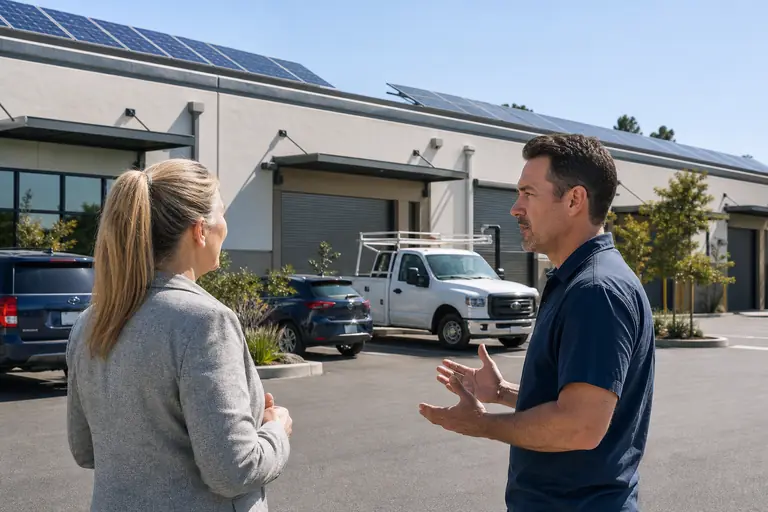
Businesses that lease their building can get solar, but the landlord has to agree, and the deal works best when ownership, roof access and what happens at the end of the lease are settled in writing first. The most common paths are a landlord-owned system that serves the tenant, a tenant-owned or financed system with a roof access agreement, a third-party PPA, or a shared system on a multi-tenant property. The right choice depends mostly on how long you plan to stay.
Start with the lease
Before you call an installer, read your lease. Most commercial leases restrict alterations, roof access and electrical work. Look for:
- How many years remain, and whether you have renewal options.
- Who owns improvements you make, and whether you must remove them at the end.
- Who is responsible for the roof and how roof repairs are handled.
- Whether utilities are separately metered or billed through the landlord.
- Any insurance, indemnity or approval requirements for alterations.
A tenant with two years left faces a very different decision than one with a ten-year lease and renewal options. Solar systems last for decades, so the lease term shapes everything else.
Four common structures
1. The landlord installs and owns the system
The landlord pays for the system and benefits through higher rent, a separate charge for solar power or a more attractive property. This works well for long-term owners and is easiest when the tenant’s space has its own SDG&E meter. For you, it means lower bills without owning equipment.
2. The tenant installs with a roof access agreement
You pay for or finance the system and sign an agreement with the landlord covering roof access, maintenance, insurance, removal and what happens if you move. This suits tenants with long leases and meaningful daytime power use.
3. A third-party PPA or lease
A solar company owns the system and sells you the power, usually under a long contract. You need landlord consent and a plan for what happens to the contract if you leave. Read the transfer, buyout and removal clauses carefully.
4. A shared system on a multi-tenant property
On properties with several tenants, California’s utility tariffs have allowed one system to serve multiple meters through virtual net metering arrangements, and newer net billing tariff versions exist for multi-tenant properties. These setups are more complex, and the landlord usually drives them. Ask SDG&E and an experienced installer what currently applies to your property.
Terms to negotiate
Whatever the structure, put these points in writing as a lease amendment or a separate agreement. Talk to your attorney before you sign.
- Roof access for installation, monitoring and repairs, with notice requirements.
- Responsibility for roof penetrations, leaks and the roof warranty.
- Who pays for removing and reinstalling panels if the roof needs work.
- Insurance coverage for the system and liability.
- What happens at lease end: removal, transfer to the landlord or sale to the next tenant.
- How savings or solar charges are calculated and billed if the landlord owns the system.
Green lease clauses can help. These lease terms align landlord and tenant interests on energy and water, such as sharing data, sharing savings from upgrades and agreeing on efficiency standards. They make projects like solar easier to approve and finance.
Pitching solar to your landlord
Landlords respond to numbers and risk, not good intentions. Make the case the way you would make a bid:
- Show your usage and what the system would offset, using your SDG&E interval data.
- Explain how the roof will be protected, ideally with input from the roofer who holds the warranty.
- Point out the value to the property: lower operating costs and a building that is more attractive to future tenants.
- Offer to handle the project management and bring a licensed, insured installer.
- Be clear about removal and end-of-lease terms so the landlord isn’t left with surprises.
Under California’s net billing tariff, solar pays best when the power is used on site, so tenants with strong daytime use make the strongest case. Our guide on what solar really costs a small business explains the numbers to bring to that conversation.
If solar isn’t possible
Some landlords will say no, and some roofs aren’t suitable. You still have options. Efficiency upgrades within your space, such as LED lighting, controls and load shifting, reduce your bill without touching the roof. If your city is served by San Diego Community Power or Clean Energy Alliance, you can check whether a higher-renewable or 100 percent renewable service option is available for your account. These options change where your power comes from without any equipment, and they are easy to document in a bid or on your website.
How chamber membership helps
Solar on a leased building takes cooperation between tenants, landlords, installers and roofers. The San Diego Green Chamber brings those businesses into one network, and every member commits to reducing energy and water use. Find installers and roofers in the Member Business Directory, explore the chamber’s work with the solar and storage industry, and meet property owners and peers at free networking events co-hosted with San Diego Green Drinks. Learn about membership.
Questions
Can a tenant install solar on a leased building?
Yes, with the landlord’s written consent. A roof access agreement or lease amendment should cover access, roof responsibility, insurance and what happens at lease end.
What happens to the solar system when my lease ends?
That depends on your agreement. Common options are removal, transfer to the landlord or sale to the next tenant. Settle this before installation.
How long should my lease be for solar to make sense?
Longer is better because systems last for decades. Tenants with short leases often do better with a landlord-owned system or a transferable PPA.
What is a green lease?
A green lease includes clauses that align landlord and tenant interests on energy and water, such as sharing data and sharing savings from upgrades.
Sources
Prove it. Get referred for it.
Join the San Diego Green Chamber to get listed, introduced and referred by businesses that check.