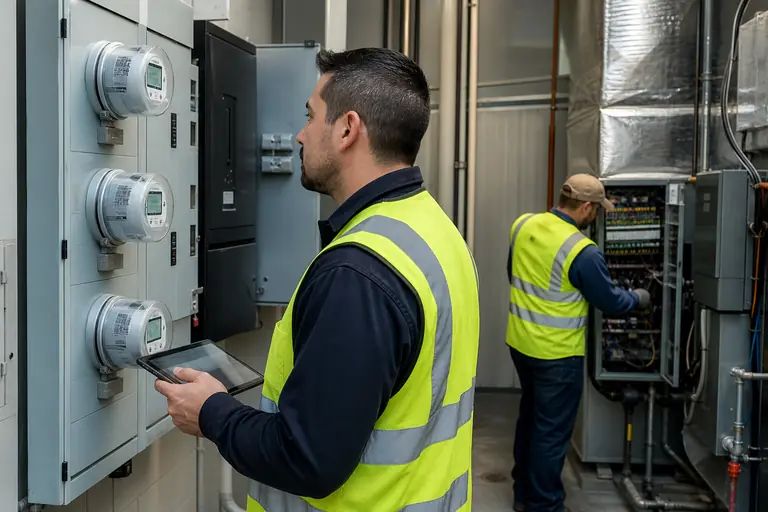
A green facilities management checklist covers five areas: energy, water, waste, cleaning chemicals and purchasing, plus a way to track results. Start with your utility bills and hauling invoices, fix the cheap problems first (schedules, leaks, overflowing trash bins), then lock in the gains with written procedures. The steps below are ordered by cost and payback for a typical San Diego commercial building.
Start with a baseline you can defend
You can’t show progress without a starting number. Pull 12 months of SDG&E bills (or your community choice provider’s bills, if your city uses one), water bills from your local water agency, and invoices from your waste hauler. Put them in one spreadsheet by month. That baseline is what tenants, owners and bid reviewers will ask for when you claim savings.
- Electricity: monthly kWh and peak demand (kW) from each meter.
- Natural gas: monthly therms, if the building uses gas.
- Water: monthly use from each meter, including dedicated irrigation meters.
- Waste: container sizes, pickup frequency and cost for trash, recycling and organics.
- Supplies: annual spend on cleaning chemicals, paper products and can liners.
Energy: schedules first, equipment second
Most buildings waste energy on schedules before they waste it on old equipment. HVAC systems that run on weekends, lights left on in empty floors and exhaust fans that never shut off are common and cost almost nothing to fix. Check these before you price new hardware.
- Walk the building after hours and on a weekend. Note every system that is running with nobody inside.
- Reset HVAC and lighting schedules to match real occupancy, including holidays.
- Check that thermostats in common areas are locked or limited to a sensible range.
- Review your rate plan with SDG&E. Most business customers are on time-of-use rates, so moving flexible loads out of the late-afternoon and evening peak can cut costs.
- Plan lighting and HVAC upgrades only after the schedule fixes are in place, so you measure the upgrade’s savings on top of an honest baseline.
Coastal buildings in La Jolla or Point Loma often need far less cooling than inland sites in El Cajon or Escondido. Set expectations by location. A cooling-heavy inland building usually has more to gain from economizer checks and HVAC tune-ups.
Water: leaks and irrigation
Irrigation is often the biggest outdoor water use on a commercial property, and leaks are the biggest hidden one. Read the water meter at close of business and again before opening. If it moved and nothing was supposed to run, you have a leak. Our guide on finding and fixing hidden water leaks walks through the full process.
- Check toilets and urinals for running water and worn flappers or valves.
- Inspect cooling towers and boilers for overflow or excessive blowdown.
- Set irrigation controllers to the season and shut them off after rain.
- Look for water conservation rebates through the San Diego County Water Authority and your local water agency, and confirm current terms before you buy.
Waste, cleaning and purchasing
Right-size and separate waste
California requires businesses to arrange recycling service and, under SB 1383, organics recycling service, with some exemptions. Your city or hauler handles enforcement and service details, so call them to confirm what applies to your building. Once the service is in place, the savings come from right-sizing. If your trash bin goes out half empty, you are paying for air.
- Put clearly labeled recycling and organics bins next to every trash bin, never alone.
- Audit one week of trash to see what should have been recycled or composted.
- Ask your hauler about reducing trash container size or frequency once diversion improves.
- Train janitorial staff on which liner goes in which bin, since mixed bags undo tenant effort.
Cleaning chemicals and supplies
Cleaning products affect indoor air, staff health and tenant complaints. Look for products certified under recognized programs such as EPA Safer Choice or Green Seal, and use dilution systems so staff mix concentrates at the right strength. Over-concentrated product wastes money and leaves residue. Write a short purchasing policy that covers paper products, liners, chemicals and lamps, so the next order follows the same rules as this one.
For the cleaning side in more depth, see our green cleaning and facilities industry page, which covers the businesses that provide these services in San Diego County.
Track it and report it
Use the same spreadsheet you built for the baseline. Add a column for each fix with the date, the cost and the expected effect, so you can tie a drop in the bill to the work that caused it. Weather matters too. A mild summer can make an HVAC project look better than it was, so compare against the same months of the prior year and note unusual heat waves or rainy winters.
A checklist only works if someone owns it. Assign each area to a named person, review the spreadsheet every quarter and write down what changed. Large commercial buildings in California may also have state energy benchmarking obligations through the California Energy Commission, so confirm if your building meets the size threshold. Keep notes on every fix with dates and costs. When a tenant or buyer asks what you have done, you hand them records, not adjectives.
How chamber membership helps
Every San Diego Green Chamber member commits to reducing energy and water use, so this checklist is the kind of work members already do. Membership connects you with facilities, efficiency and cleaning companies through free networking events co-hosted with San Diego Green Drinks, gives you a Member Business Directory listing and offers education and sustainability certification options. See how membership works.
Questions
What should a green facilities checklist cover first?
Start with a 12-month baseline of energy, water and waste bills, then fix schedules, leaks and oversized trash service. Those steps cost little and show results quickly.
Do San Diego businesses have to recycle organics?
Under California’s SB 1383, most businesses must arrange organics recycling service, with some exemptions. Confirm the rules for your building with your city or waste hauler.
How often should we review the checklist?
Review the numbers quarterly and walk the building at least twice a year, including once after hours. Seasonal changes in irrigation and cooling make spring and fall good checkpoints.
Which cleaning product labels are credible?
Third-party programs such as EPA Safer Choice and Green Seal set published criteria. Be cautious with labels that only say “natural” or “eco” without a named standard.
Prove it. Get referred for it.
Join the San Diego Green Chamber to get listed, introduced and referred by businesses that check.