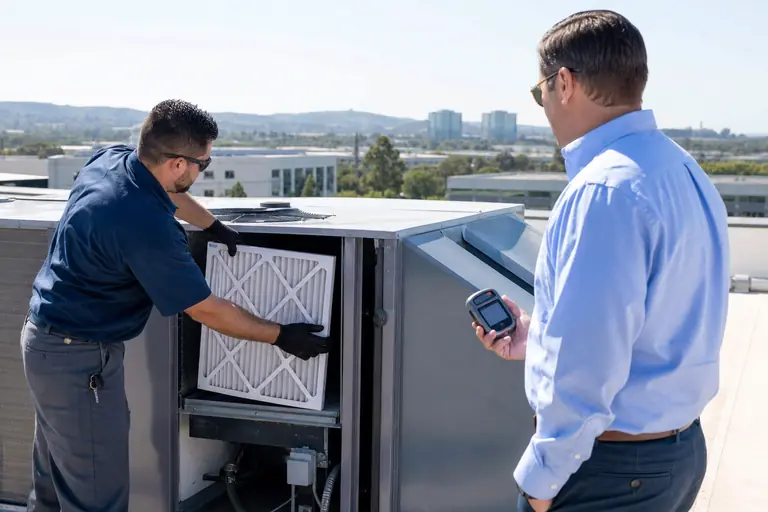
The practical steps to better indoor air quality in an office are: confirm the ventilation system brings in enough outdoor air, use the best filters your system can handle, measure CO2 as a ventilation check, remove chemical sources such as harsh cleaners and new-furniture off-gassing, and have a plan for wildfire smoke days. Most of this is maintenance and purchasing, not new construction.
Why office air quality is a business issue
Stuffy rooms, odors and headaches turn into tenant complaints, sick days and lease conversations. Employers also carry workplace safety duties under Cal/OSHA. For property managers and cleaning contractors, air quality is a service you can measure and report, which makes it easier to sell and easier to defend when someone complains.
Start with a short walk-through. Note rooms that feel stuffy, spots with odors, water stains on ceiling tiles and vents blocked by furniture. Ask tenants or staff where they notice problems. That list tells you where to look first and gives you a before picture to compare against later.
Check ventilation and filters first
Confirm outdoor air reaches the space
Commercial buildings in California are designed to supply a minimum amount of outdoor air under the state energy code (Title 24) and mechanical code. Over time, dampers stick, schedules drift and economizers fail. A building can meet code on paper and still under-ventilate in practice.
- Ask your HVAC contractor to confirm outdoor air dampers open as designed during occupied hours.
- Check that the system runs ventilation before people arrive, not only when the thermostat calls for cooling.
- Test economizers, which are common on San Diego rooftop units and often fail without anyone noticing.
- Keep supply and return vents clear of furniture, boxes and partitions.
Upgrade filters within the system’s limits
Filters catch fine particles from traffic, construction dust and smoke. Many public health agencies recommend MERV 13 filters where the equipment can handle them, because they capture a much larger share of fine particles than standard low-efficiency filters. Higher-rated filters add resistance to airflow, so ask your HVAC contractor to confirm what your fans can handle before you switch. Change filters on schedule and record the date on the unit.
For small rooms with weak ventilation, portable air cleaners with HEPA filters are a reasonable add-on. Size them to the room and keep them running during work hours.
Coastal buildings have one more issue: moisture. Marine air and morning fog can keep humidity high in buildings near the beach in Oceanside, Pacific Beach or Imperial Beach. Fix roof and plumbing leaks quickly, replace water-stained ceiling tiles and make sure bathroom and kitchen exhaust fans work. Damp materials grow mold, and no filter fixes a wet wall.
Measure CO2 as a ventilation check
People breathe out carbon dioxide, so CO2 levels rise in rooms that are not getting enough fresh air. A basic CO2 monitor in a conference room tells you whether ventilation keeps up with a full meeting. CO2 is not a complete air quality measure. It doesn’t detect smoke or chemicals. It is a cheap, useful signal that ventilation needs attention.
- Place monitors at seated head height, away from doors, windows and people’s faces.
- Watch for rooms where levels climb steadily during meetings and stay high.
- Use the readings to adjust ventilation schedules or room booking limits.
- Log readings monthly so you can show improvement after a fix.
Cut chemical sources
Cleaning products, air fresheners, new carpet, furniture and paint release volatile organic compounds (VOCs). Choose cleaning products certified under programs such as EPA Safer Choice or Green Seal, skip fragranced air fresheners and use dilution systems so products are mixed at the right strength. California’s Air Resources Board regulates VOC content in many consumer and cleaning products, which helps, but certified products go further. Our guide to choosing green cleaning products covers what to look for on the label.
When you renovate, ask for low-emitting materials and flush the space with outdoor air before people move back in.
Tell tenants and staff what you changed. A short note that says filters were upgraded, ventilation schedules were fixed and fragranced products were removed turns maintenance work into something people notice and credit.
Plan for wildfire smoke days
San Diego County sees wildfire smoke, especially during Santa Ana wind events in fall. Cal/OSHA has a wildfire smoke rule that requires employers to take protective steps for outdoor workers when air quality reaches unhealthy levels, and indoor air matters for everyone else. Write a simple plan before the next fire season.
- Check air quality through the San Diego County Air Pollution Control District or AirNow.
- Know how to set your HVAC system to recirculate during heavy smoke and when to return to normal.
- Keep spare high-efficiency filters on site, since they sell out during fire events.
- Assign one person to make the call and notify staff and tenants.
This is general information, not legal advice. Talk to a safety professional or attorney about your specific Cal/OSHA duties. Cleaning and facilities companies that can deliver these services are listed on our green cleaning and facilities page.
How chamber membership helps
San Diego Green Chamber members commit to reducing energy and water use, and better air quality usually comes from the same well-maintained systems. Membership puts you in a room with HVAC, cleaning and facilities companies at free networking events co-hosted with San Diego Green Drinks, plus education, resources and a Member Business Directory listing. Learn about membership.
Questions
What is the cheapest way to improve office air quality?
Confirm your HVAC system brings in outdoor air during occupied hours and change filters on schedule. Both are maintenance tasks, not capital projects.
Should every office switch to MERV 13 filters?
Many health agencies recommend MERV 13 where the system can handle it. Ask your HVAC contractor to confirm your fans can move enough air with the higher-rated filter first.
Does a CO2 monitor measure air quality?
It measures how well ventilation keeps up with the people in a room. It doesn’t detect smoke, dust or chemicals, so use it as one signal among several.
What should we do on wildfire smoke days?
Follow a written plan: check local air quality, set the HVAC system as your contractor advises, use spare high-efficiency filters and follow Cal/OSHA rules for any outdoor workers.
Prove it. Get referred for it.
Join the San Diego Green Chamber to get listed, introduced and referred by businesses that check.