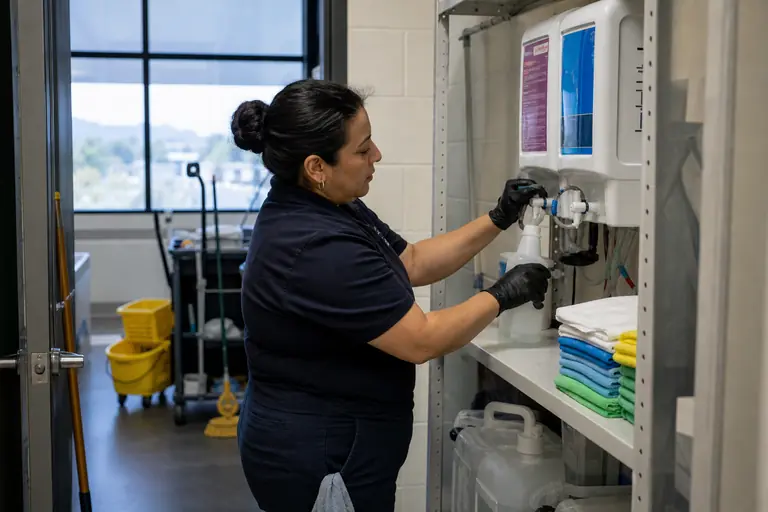
To reduce waste in janitorial operations, focus on the four biggest streams: ready-to-use chemical bottles, paper towels and tissue, plastic can liners, and disposable mops and wipes. Switch to concentrates with dilution systems, move to washable microfiber, right-size liners and stop changing them when they are clean, and use controlled paper dispensers. Each change lowers supply spend, which is how you pay for it.
Where janitorial waste actually comes from
Before you change anything, look at your supply invoices for the last year. The line items with the biggest unit counts are usually your biggest waste streams. For most cleaning crews, that means liners, paper and chemical containers. Write down the monthly counts so you can measure the drop.
Also look at how supplies arrive. Several small deliveries a week mean more cardboard, more shrink wrap and more truck trips. Consolidating orders into fewer, larger deliveries reduces packaging and often lowers freight charges. Ask your distributor to take back pallets and to ship in reusable totes if it offers that option.
Chemicals: concentrates and dilution control
Ready-to-use spray bottles mean you buy water and plastic every week. Concentrates shipped in larger containers and mixed through a wall-mounted dilution system cut the packaging and the freight. They also stop staff from guessing at ratios, which reduces product waste and residue.
- Install dilution stations in each supply closet and label every refillable bottle.
- Choose concentrates certified under EPA Safer Choice or Green Seal where you can.
- Reduce the number of products. Many crews can cover most tasks with a small core set.
- Return or recycle empty drums through your distributor if it offers a take-back program.
Paper, liners and disposables
Paper and dispensers
Paper towels and tissue are a large share of restroom waste. Controlled-portion or hands-free towel dispensers reduce how much each person pulls. High-capacity rolls mean fewer cores and less packaging. Look for products with recycled content, and ask your supplier for the post-consumer percentage in writing so you can report it accurately.
Used paper towels are generally not accepted in standard recycling. Ask your hauler or city whether they go in organics, because local programs vary under SB 1383.
Liners and disposables
Changing every liner every night, full or empty, is a habit, not a requirement. Many facilities move to a dump-and-reuse practice for desk-side bins with dry paper, and change liners only when they are soiled or full. Right-sizing liners to the bin also cuts plastic. A liner that is too big gets tied off half full and wasted.
- Measure your bins and match liner sizes to each one.
- Set a written rule for when liners get changed and when they get reused.
- Use thinner, stronger liners where the load allows. Ask your supplier for options.
- Replace disposable mop heads and wipes with launderable microfiber, and track wash cycles.
Microfiber needs a laundering plan. Wash it separately, skip fabric softener and retire cloths when they stop picking up dirt. Done right, one cloth replaces a large number of disposable wipes.
Equipment
Worn vacuums, scrubbers and burnishers often end up in the trash when a repair would do. Keep a simple maintenance log, replace filters and belts on schedule and repair before you replace. When you do buy new, battery-powered equipment can reduce noise and cords, and newer machines often use less water and chemical per square foot. Recycle old batteries and electronics through a certified e-waste recycler, never in the trash.
Recycling and organics on the cleaning route
The janitorial crew is the last person to touch every bin in the building. If they combine recycling and trash into one cart, the tenant’s sorting is lost. California requires most businesses to have recycling and organics service, and CalRecycle sets the statewide framework under AB 341, AB 1826 and SB 1383. Your city and hauler set the local details.
- Use different liner colors for trash, recycling and organics, and stick to them.
- Give crews a one-page sheet showing what goes where for that specific building.
- Report contaminated bins to the property manager instead of tossing them into trash.
- Keep a short log of contamination problems so the manager can fix signage or tenant habits.
For the building-level side of this work, our guide on setting up a commercial recycling program covers bins, signage and hauler conversations.
Measure it and sell it
Keep the tracking simple. One sheet per account with monthly counts of liner cases, paper cases, chemical containers and microfiber replacements is enough. Review it with your supervisors each month. When one building’s numbers jump, it usually points to a training gap, a broken dispenser or a tenant change, and you can fix it before the client notices.
Track monthly units of liners, paper and chemical containers, and compare them to your baseline. Those numbers matter. A cleaning company that can tell a property manager it cut liner use and chemical containers on their account, with invoices to back it up, has a stronger proposal than one that says it is “green.” Cleaning companies doing this work are featured on our green cleaning and facilities page.
How chamber membership helps
Every San Diego Green Chamber member commits to reducing energy and water use, and lean janitorial practices fit that commitment. Membership gets you a Member Business Directory listing, education and resources, sustainability certification options and free networking events co-hosted with San Diego Green Drinks, where you meet property managers and building owners. Explore membership.
Questions
What is the fastest way to cut janitorial waste?
Switch from ready-to-use bottles to concentrates with dilution control, and stop changing clean liners. Both reduce waste and supply costs within the first month.
Can used paper towels be recycled?
Usually not in standard recycling. Some local organics programs accept them, so check with your city or hauler.
Is microfiber really better than disposable wipes?
It can be, if you launder it properly and track replacement. One cloth can replace many disposables over its life.
Do cleaning crews have to sort recycling?
The business must have recycling and organics service under state law. Crews who combine bins undo that effort, so training and colored liners matter.
Prove it. Get referred for it.
Join the San Diego Green Chamber to get listed, introduced and referred by businesses that check.