To find a hidden leak in a commercial building, read the water meter when the building is closed and nothing should be running, then read it again a few hours later. If the number moved, water is escaping somewhere. Work through the usual suspects in order: toilets and urinals, irrigation, cooling and process equipment, water heaters, then buried supply lines. Fix what you find and confirm with another meter test.
Why hidden leaks cost more than you think
A leak that runs all day and night adds up faster than almost any other waste. A single toilet with a worn flapper can run constantly, and a broken irrigation line can lose a large volume in one night before anyone sees the puddle. Because many San Diego agencies base sewer charges on water use, a leak can raise two parts of your bill. It can also damage walls, floors and foundations if it runs inside the building.
Most commercial leaks are not dramatic. They are slow, quiet and out of sight: behind a wall, under a slab, inside a tank or in a planter bed nobody checks. That is why a routine test matters more than waiting for a visible sign. Leaks also cancel out savings you work for. If you replace fixtures and the bill doesn’t drop, a leak may be eating the difference.
Run the meter test
- Find your meters. Many commercial properties have separate domestic, irrigation and fire service lines. Note which meter serves what.
- Make sure nothing should be using water. Close the building after hours, turn off irrigation and note any equipment that runs overnight, such as ice machines or cooling towers.
- Record the meter reading, or watch the low-flow indicator, a small dial or triangle that spins with even slight flow.
- Wait at least two hours without using water, then read the meter again.
- If the reading changed, shut off valves to sections of the building one at a time to narrow down where the loss is happening.
Repeat the test over a weekend or holiday, when the building sits empty longer. A longer window can reveal small leaks that a two-hour test misses.
If your water agency has installed smart meters with an online portal, use it. Hourly data makes overnight use obvious, and some portals send leak alerts. The City of San Diego and other agencies have been adding advanced meters, so ask whether your account has access to interval data.
Where to look first
Restrooms
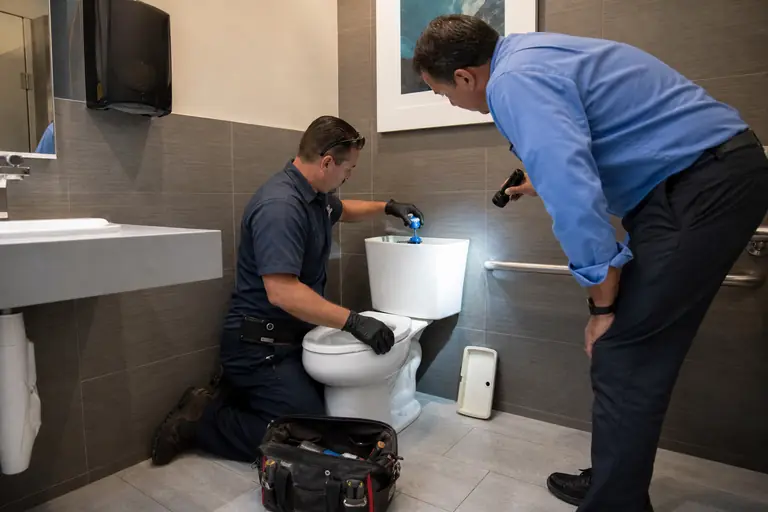
Toilets are the most common indoor leak. Put a few drops of food coloring or a dye tablet in the tank, wait 15 minutes without flushing and check the bowl. Color in the bowl means the flapper or fill valve is leaking. Flushometer valves on commercial toilets and urinals can also stick or leak through worn seals. Listen for running water and look for constant trickles.
Irrigation
Look for soggy areas, unusually green patches, water in gutters on dry days, sunken soil and sprinklers that spray weakly. A valve that does not fully close will leak into a zone even when the controller is off. Run each zone and walk it. A smart controller with a flow sensor can flag these problems automatically. Our guide to smart irrigation controllers covers that option.
Mechanical and process equipment
- Cooling towers: check for overflows, stuck float valves and excessive drain-off.
- Water heaters and boilers: check relief valve discharge lines for dripping.
- Ice machines and reverse osmosis systems: check that they shut off properly and that reject water is within spec.
- Backflow preventers: look for discharge from relief ports, which can signal a failing device.
- Hose bibs and mop sinks: check for drips and hoses left connected and running.
Buried and hidden lines
If the meter still moves after you have checked fixtures and equipment, the leak may be in a supply line under the slab, in a wall or between the meter and the building. Signs include warm spots on floors, the sound of running water, damp drywall, cracks in pavement and wet soil near the meter. Finding these leaks usually takes a plumber with acoustic or thermal detection equipment.
Fixing and preventing leaks
Small repairs such as flappers, fill valves, flushometer seals and irrigation heads are inexpensive and quick. Larger repairs, like a slab leak or a broken main, need a licensed plumbing contractor, usually holding a C-36 license from the Contractors State License Board. Get the repair documented with photos and a description, since some water agencies offer a one-time bill adjustment after a verified leak repair. Ask yours what it requires.
Prevention is cheaper than repair. Put a short monthly meter check on your facilities calendar, record the result and compare it over time. Add leak checks to janitorial and maintenance routines. Replace older fixtures with WaterSense labeled models as they fail. A consistent record also gives you hard data when you report water savings to customers, tenants or owners.
Water efficiency contractors and plumbers in our water efficiency and landscaping network can run a full leak survey if you would rather hand it off.
How chamber membership helps
Every San Diego Green Chamber member commits to reducing energy and water use, and fixing leaks is often the quickest win. Membership gives you practical education and resources, connections with local contractors, a listing in the Member Business Directory and free networking events co-hosted with San Diego Green Drinks. Find out how to join.
Questions
How do I test my building for a water leak?
Read the meter or watch its low-flow indicator when no water should be in use, wait at least two hours and read it again. Any movement points to a leak.
What is the most common commercial water leak?
Leaking toilets and urinals are the most common indoor leak. Outdoors, broken irrigation lines, heads and valves are frequent culprits.
Can I get a bill adjustment after fixing a leak?
Some water agencies offer a one-time adjustment after a verified repair. Ask your agency what documentation it needs.
When should I call a plumber for leak detection?
If the meter still moves after you have checked fixtures, irrigation and equipment, the leak may be in a buried or hidden line that needs professional detection.
Prove it. Get referred for it.
Join the San Diego Green Chamber to get listed, introduced and referred by businesses that check.