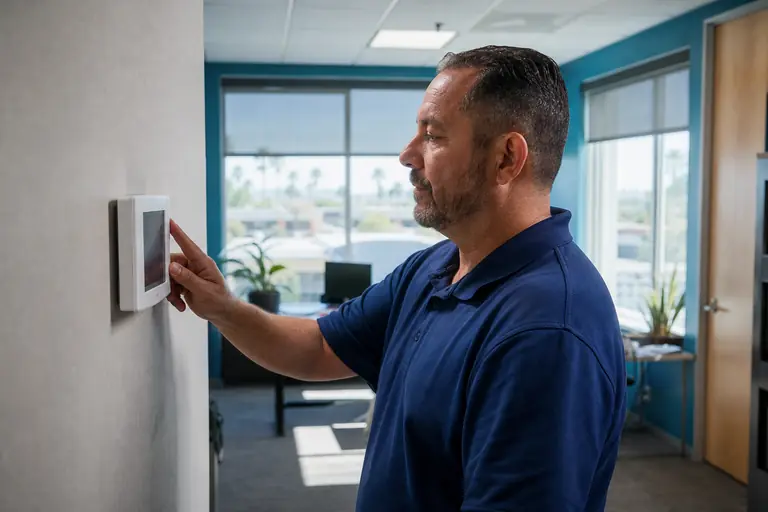
Businesses on time-of-use rates can cut costs by moving flexible electricity use out of the on-peak window, which on most current SDG&E plans runs from 4 p.m. to 9 p.m. every day. Pre-cooling buildings, scheduling water heating and EV charging, and running equipment earlier in the day can lower bills without using less energy. Start by finding which loads can move, then measure the change on your interval data.
For many small businesses, the savings come from habits and schedules rather than equipment. A thermostat schedule, a timer on a water heater and a charging schedule for a few EVs are changes you can make this week.
How time-of-use rates work
On a time-of-use plan, the price per kWh changes by time of day, and often by season. SDG&E plans generally divide the day into on-peak, off-peak and super off-peak periods, with summer on-peak prices the highest of the year. The on-peak window reflects when demand on the grid is highest and solar output is fading, so power costs the most to supply.
The exact periods, seasons and prices depend on your rate schedule, and the CPUC approves changes over time. Check your bill or your SDG&E online account for the schedule you are on. Some business rates also include demand charges, which bill you for your highest use in a short interval. Shifting load helps with both. Lowering use during the peak cuts energy charges, while spreading large loads across the day keeps your demand reading down.
Find the loads you can move
Not every load can shift. Lights in an open store and the register have to run when customers are there. Look instead for loads that are flexible in time:
- Cooling. Buildings can be pre-cooled before 4 p.m. and allowed to drift a degree or two during the peak, within comfort limits.
- Water heating. Electric and heat pump water heaters with storage tanks can heat water earlier and coast through the peak.
- EV charging. Fleet and workplace chargers can be scheduled for midday or overnight.
- Refrigeration. Walk-ins and freezers can be pulled slightly colder before the peak, within food safety limits.
- Process equipment. Compressors, pumps, kilns, washers and production runs can often be scheduled earlier.
- Pool and irrigation pumps. These rarely need to run in the evening.
A step-by-step plan
- Download 12 months of interval data from your SDG&E account (Green Button) and see what your load looks like from 4 p.m. to 9 p.m.
- List equipment running during those hours and mark which items are flexible.
- Change schedules on thermostats, timers and building controls for the flexible loads.
- Brief staff on what changed, such as starting the dishwasher before the dinner rush rather than during it.
- Stagger large equipment start-ups to avoid demand spikes.
- Compare bills for the same months before and after, and adjust.
Most of these steps cost nothing. Where controls are old, a smart thermostat or a simple timer can pay for itself quickly. For restaurants, the biggest wins are often prep and dishwashing schedules. For offices, it is usually HVAC. For light industrial shops, it is production timing and compressed air, which is also one of the most common sources of hidden waste.
Use storage and solar to cover the peak
Solar produces most of its power in the middle of the day, before the on-peak window starts. Under California’s net billing rules, solar exports are generally worth less than the power you buy at peak, so self-consuming solar output and covering evening use matter more than they used to. A battery can store midday solar or off-peak grid power and discharge during the peak. Our guide to battery storage for San Diego businesses covers when that pays off.
Thermal storage is a simpler version of the same idea. A pre-cooled building, a chilled walk-in or a full hot water tank is stored energy you paid for at a lower price.
Demand response and rate reviews
SDG&E and state programs have offered demand response options that pay businesses to reduce load during grid emergencies or high-demand events. Terms, eligibility and payments change, so check current offerings with SDG&E and the CPUC. If you are already shifting load, enrolling can add revenue for work you are doing anyway. Read the program rules closely. Some charge penalties if you enroll and then fail to reduce load when an event is called, so commit only the loads you can reliably drop.
Keep a simple log of each change and its result. A note that says the building now pre-cools at 2 p.m. and on-peak use fell by a measured amount is the kind of specific record customers and bid reviewers trust.
Review your rate plan once a year, and after any major change such as adding solar, storage or EV chargers. A different plan may fit your new load shape better. Efficiency contractors and energy consultants in our energy efficiency and HVAC network can model the options.
How chamber membership helps
Load shifting is an easy, measurable step toward the commitment every San Diego Green Chamber member makes to reduce energy and water use. Members get education on rate changes and programs, a Member Business Directory listing to find controls, storage and efficiency contractors, and free networking events co-hosted with San Diego Green Drinks. The chamber also works as a unified voice on policy, including energy issues that affect local businesses. Explore membership.
Questions
What are on-peak hours on SDG&E time-of-use rates?
On most current plans, on-peak hours run from 4 p.m. to 9 p.m. every day. Your rate schedule may differ, so check your bill or SDG&E account.
Does shifting load reduce how much energy I use?
Not necessarily. Load shifting changes when you use power, which lowers cost on time-of-use rates. Pair it with efficiency upgrades to cut total use as well.
Is battery storage worth it just for time-of-use savings?
It can be, depending on your load, rate, solar and incentives. Get a model based on your interval data before you buy.
Prove it. Get referred for it.
Join the San Diego Green Chamber to get listed, introduced and referred by businesses that check.