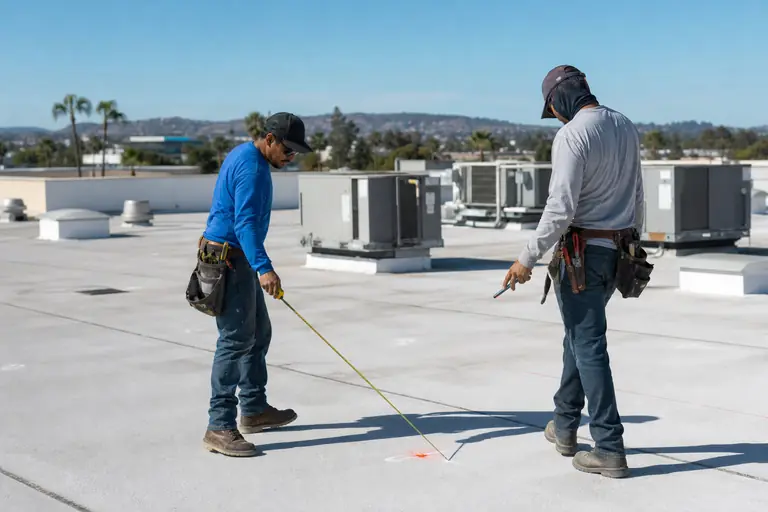
Your roof is ready for solar if it will last as long as the panels, can carry the extra load, and still has usable space once fire code access pathways and rooftop equipment are accounted for. If the roof has less than about the panels’ expected life left, replace or restore it first. Removing and reinstalling an array to fix a roof later is a cost you can avoid with an hour of inspection now.
Start with roof age and condition
Remaining life
Solar panels are typically warrantied for 25 years or more. A roof installed 15 years ago may not make it that long. The math is simple: if the roof will need replacement while the panels are still producing, you will pay to detach, store and reset the array, plus the new roof.
Ask a roofing contractor, not only the solar installer, to estimate remaining service life. Bring the original roof warranty and any repair records. For many owners, the right move is to bundle a reroof or a restoration coating with the solar project so both start their life together.
Current condition
A walk-through and, for larger roofs, a moisture survey will tell you whether the roof can take a 25-year commitment. Check condition before anyone starts drawing a panel layout. Look for:
- Active leaks or stains on the ceiling below.
- Ponding water that stays more than a couple of days after rain.
- Soft spots, blisters, splits or open seams in the membrane.
- Wet insulation found by infrared or core samples.
- Worn flashing at curbs, parapets, drains and existing penetrations.
- Several old layers of roofing, which can limit recover options later.
Fix drainage problems before the panels go in. Water that ponds under an array is harder to see and harder to repair. The same goes for small leaks you have been living with. Once racking covers a section of roof, finding the source of a leak means moving equipment, and every service call costs more.
Roof type matters too. Single-ply membranes, built-up roofs, modified bitumen, metal and tile each have their own attachment methods and limits. Metal roofs can often take clamp-on racking with few penetrations. Tile roofs need careful handling to avoid cracked tiles around mounts. Make sure your installer has done the method your roof needs, and ask to see a past project on the same roof type.
Confirm the structure can carry the load
Panels, racking and ballast add weight, and older commercial buildings were not always designed with that in mind. Ballasted systems on flat roofs add more dead load than attached systems. Your installer should have a structural engineer review the roof framing for the specific system, especially on older tilt-up, wood-frame or light-steel buildings.
The structural review also affects wind design and attachment details, so it shapes cost. Get it early, before you compare final bids.
Account for fire code pathways and rooftop equipment
California’s fire code requires clear access pathways and setbacks on roofs with solar so firefighters can move and ventilate safely. On a crowded commercial roof, those pathways, plus HVAC units, skylights, vents and hatches, can shrink the usable area well below what a satellite image suggests.
Walk the roof with your installer and a roofer together. Mark the equipment, the required clearances and any units due for replacement soon. Swapping an old rooftop HVAC unit after the array is installed can be awkward, so plan its replacement or relocation into the project.
Protect your roof warranty
Every attachment is a penetration, and penetrations are where leaks start. Before installation:
- Ask your roof manufacturer or roofer what the warranty requires for solar attachments.
- Agree on the attachment and flashing method in writing.
- Have the roofing contractor approve or perform the flashing work where the warranty requires it.
- Document the roof condition with photos before installation starts.
- Clarify who is responsible for leaks at attachment points, and for how long.
This is one reason more owners hire roofers and solar installers who already work together. Our roofing and cool roofs page covers how those firms team up.
Permits, utility and the rest of the project
In the City of San Diego, commercial solar goes through Development Services for permits. Other cities in the county run their own building departments. You will also need interconnection approval from SDG&E, and your project will be compensated under California’s current net billing rules, so the economics depend on how much of your solar output you use on site. Our guide to what solar really costs a small business covers the financial side.
If the roof is due for replacement anyway, consider a cool roof surface. It reduces cooling loads on the building and gives the array a durable, reflective base.
How chamber membership helps
The San Diego Green Chamber brings roofers, solar installers, engineers and building owners into the same room. Members commit to reducing energy and water use, are listed in the Member Business Directory, and can meet partners at free networking events co-hosted with San Diego Green Drinks. That makes it easier to find a roofer and installer who already coordinate. Explore membership.
Questions
How old is too old for a roof to get solar?
There is no fixed age. The question is whether the roof will last as long as the panels, often 25 years or more. If not, replace or restore it before installation.
Who should inspect the roof, the solar company or a roofer?
Ideally both. A roofing contractor can judge condition and remaining life, and a structural engineer should confirm the framing can carry the system.
Will solar void my roof warranty?
It can if attachments are not done to the manufacturer’s requirements. Check the warranty terms and agree on flashing methods in writing before work starts.
Prove it. Get referred for it.
Join the San Diego Green Chamber to get listed, introduced and referred by businesses that check.