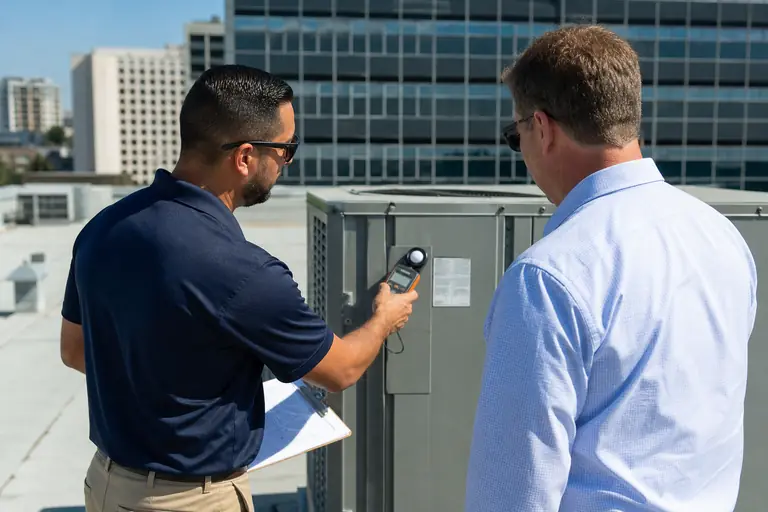
A commercial energy audit reviews your utility bills, inspects how the building uses energy, and gives you a ranked list of improvements with estimated savings and costs. Most audits follow the ASHRAE levels: a walk-through (Level 1), a detailed survey and analysis (Level 2), or an investment-grade study for major projects (Level 3). Cost depends mostly on building size, system complexity and which level you choose, so get written quotes and check SDG&E for any current no-cost assessments for small businesses.
What an audit covers
A good audit starts with data, then goes into the building. Expect it to cover:
- Utility bill analysis. At least 12 months of electricity and gas use, demand charges and rate schedule. SDG&E’s online account can export interval data through Green Button.
- Lighting. Fixture types, hours, controls and opportunities for LED and sensors.
- HVAC. Equipment age and condition, schedules, thermostat settings, economizers and maintenance.
- Controls. Whether the building management system or thermostats match how the building is actually used.
- Envelope. Roof, windows, doors and insulation, especially on older buildings.
- Water heating, refrigeration and process loads. Important for restaurants, grocers and light industrial.
- Plug loads. Computers, appliances and equipment left on after hours.
The audit should also check your rate plan. On SDG&E’s time-of-use rates, when you use power can matter as much as how much. A building that runs heavy loads in the late afternoon may save more by shifting schedules than by replacing equipment, and a good auditor will say so.
Ask the auditor to note water use while on site. Leaking fixtures, cooling tower issues and irrigation running at the wrong times often show up during the same walk-through, and water savings count toward your sustainability record as well.
The three audit levels
Level 1: walk-through
A bill review and a short site visit that identifies low-cost and no-cost measures and flags bigger opportunities. It suits small offices and retail spaces, or as a first step before deciding whether a deeper audit is worth it.
Level 2: energy survey and analysis
A detailed inspection with calculations of savings and cost for each measure. This is the most common level for mid-size commercial buildings and gives you enough detail to budget projects.
Level 3: investment-grade audit
Detailed engineering, often with metering and modeling, for capital-intensive projects such as major HVAC replacement or a full electrification plan. Lenders and boards often want this level before approving large spending.
Most small businesses do not need to start at Level 3. A Level 1 or Level 2 audit usually finds enough low-cost savings to fund the next step, and it tells you whether an investment-grade study is worth paying for.
What drives the cost
Audit prices vary widely, so treat any number you hear secondhand with caution. The main drivers are:
- Building size and the number of buildings or meters.
- System complexity, such as central plants, refrigeration or process equipment.
- Audit level, since Level 3 involves far more engineering time than Level 1.
- Whether metering or data logging is included.
- Report format, such as whether you need documentation for a lender, incentive program or benchmarking.
Ask for quotes from two or three auditors, and compare what each includes. A low price that skips bill analysis or controls review may cost you more in missed savings. Before paying, check SDG&E’s current business programs. Utility programs have offered free or subsidized assessments for some small business customers, and terms change, so confirm what is available now.
Benchmarking and compliance
Larger commercial buildings in California must report energy use under the state’s building energy benchmarking program, run by the California Energy Commission, and the City of San Diego has its own benchmarking ordinance. Both use ENERGY STAR Portfolio Manager. Check the current size thresholds and deadlines with each agency. An audit is not the same as benchmarking, but benchmarking data is a useful starting point for one.
When choosing an auditor, ask about credentials such as Certified Energy Manager, experience with your building type, and whether they also sell equipment. An auditor who installs what they recommend is not automatically a problem, but you should know it. Ask for a sample report so you can see how measures are ranked and how savings are calculated.
Getting value from the report
An audit only pays off if you act on it. Start with the measures that pay back fastest: schedules, setpoints and controls often cost little. Then budget the larger items, such as lighting and HVAC. For lighting, our guide on estimating LED retrofit payback shows how to check the auditor’s numbers yourself. Keep your bills from before and after each project so you can show real savings to customers, lenders or bid reviewers. Auditors and contractors in our energy efficiency and HVAC network can help you plan the sequence.
How chamber membership helps
Every San Diego Green Chamber member commits to reducing energy and water use, and an audit is often the first concrete step. Members can find auditors and efficiency contractors through the Member Business Directory, learn about programs and policy through chamber education, and meet peers at free networking events co-hosted with San Diego Green Drinks. The chamber’s sustainability certification options give you a way to show the results. Explore membership.
Questions
How long does a commercial energy audit take?
A Level 1 walk-through can take a few hours on site plus time for the report. Level 2 and Level 3 audits take longer, depending on building size and whether metering is involved.
Is there a free energy audit for small businesses in San Diego?
SDG&E and state programs have offered no-cost assessments for some small business customers. Offerings change, so check SDG&E’s current business programs.
What should I give the auditor before the visit?
At least 12 months of utility bills or interval data, equipment lists if you have them, operating hours and any known comfort or equipment problems.
Prove it. Get referred for it.
Join the San Diego Green Chamber to get listed, introduced and referred by businesses that check.