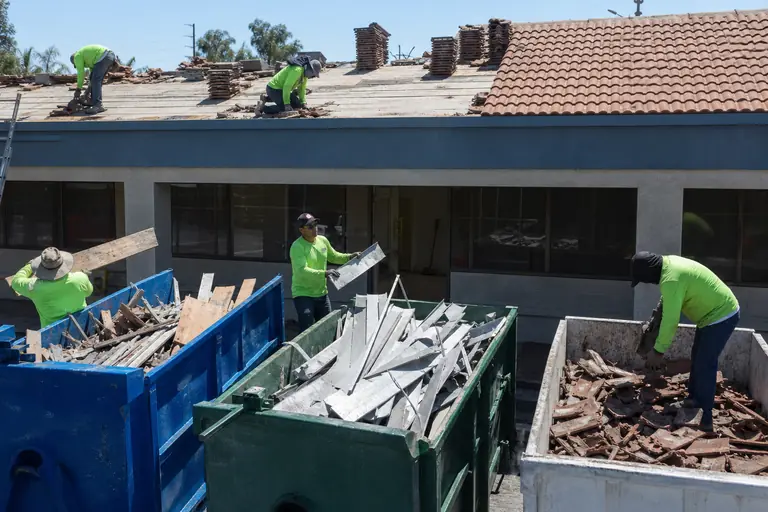
In San Diego County, metal roofing and flashing, clean wood, and clay or concrete tile have dependable recycling outlets. Asphalt shingles, built-up roofing and single-ply membranes are harder to recycle and depend on which local facilities accept them at the time. The way to recycle more on a tear-off is to plan it before the job starts: know what is on the roof, sort on site where it pays, and confirm with your hauler which facilities take which loads.
Why recycling roofing debris matters for your business
A reroof generates a lot of weight. Landfill disposal is billed by the ton, so every load you divert to a recycler or a lower-cost facility can reduce what you pay. Diversion also matters for compliance. CALGreen, the state’s green building code, sets construction and demolition waste diversion requirements for many projects, and the City of San Diego runs a construction and demolition debris diversion program tied to building permits. Other cities in the county have their own C&D rules.
Owners and general contractors increasingly ask for diversion reports at closeout. A roofer who can hand over weight tickets showing what was recycled has an easier time on bids that score sustainability.
Track the numbers on every job: tons hauled, tons diverted, and what each load cost. After a few reroofs you will know which facilities save you money, which crews sort well, and what diversion rate you can honestly promise on the next bid. That record is worth more than any general claim about being green.
Material by material: what can be recycled
Metal
Steel and aluminum roofing, flashing, gutters, drip edge and fasteners are the easiest win. Scrap metal recyclers across the county buy or accept clean metal, and some pay for it. Keep a separate bin or trailer for metal on every job.
Clay and concrete tile
Tile in good condition can often be reused or sold, especially for matching repairs on older homes and buildings. Broken tile and concrete can go to facilities that crush it into aggregate. Keep it free of underlayment and wood so the load is accepted as clean.
Wood
Clean, untreated wood from decking and framing can be recycled into mulch or other products at some facilities. Painted, treated or nail-heavy wood is harder to place. Ask your hauler what they accept.
Asphalt shingles and built-up roofing
Asphalt shingles can be recycled into road paving material in some markets, but outlets in the region are limited and change over time. Built-up roofing with gravel and tar is even harder to place. Check current options with your hauler and with local mixed C&D processing facilities before assuming these loads must go to landfill.
Single-ply membranes and insulation
Some manufacturers of TPO and PVC membranes run take-back or recycling programs, though availability varies. Dry rigid insulation boards can sometimes be reused on another job. Wet insulation usually cannot.
Test for hazardous materials first
Older roofing materials, including some felts, mastics, cements and shingles, can contain asbestos. Test suspect materials before tear-off. The San Diego County Air Pollution Control District has notification and handling rules for work that disturbs asbestos, and contaminated debris cannot go into recycling loads. Getting this wrong can contaminate an entire bin and expose your crew, so build testing into the estimate on older buildings.
How to plan a high-diversion tear-off
- Identify every material on the roof during the estimate, including layers found in core samples.
- Test suspect materials for asbestos on older buildings before pricing disposal.
- Ask your hauler which facilities accept each material and what diversion reporting they provide.
- Decide which materials to separate on site (metal almost always) and which to send as mixed C&D to a sorting facility.
- Label bins clearly and brief the crew at the start of the job.
- Collect weight tickets and facility reports for every load and file them with the job records.
For the wider jobsite picture, see our guide to planning construction waste diversion on every job.
Reduce waste before it starts
The cheapest ton to recycle is the one you never tear off. A restoration coating on a sound roof can avoid a full tear-off entirely, and a recover over a single existing layer, where code and the roof’s condition allow, keeps material out of the waste stream. Ordering accurately and returning unopened materials to suppliers also cuts waste on new installs.
Packaging adds up as well. Pallets can often go back to suppliers or to pallet recyclers, and cardboard and shrink wrap belong in a separate recycling bin rather than the roofing debris load.
Roofers who track these numbers have a real story to tell customers. Our roofing and cool roofs page covers how roofing firms turn practices like these into referrals.
How chamber membership helps
The San Diego Green Chamber connects roofers with haulers, recyclers, builders and property managers who care about diversion. Members commit to reducing energy and water use, are listed in the Member Business Directory, and get education on waste and building policy plus free networking events co-hosted with San Diego Green Drinks. The chamber also offers sustainability certification options that reward documented steps like these. Learn about membership.
Questions
Can asphalt shingles be recycled in San Diego?
Sometimes. Shingle recycling outlets in the region are limited and change, so ask your hauler and local C&D facilities about current options before each job.
Do roofing projects have to meet waste diversion rules?
Many do. CALGreen sets construction waste diversion requirements for covered projects, and the City of San Diego and other cities have their own C&D programs tied to permits. Check with your local building department.
What should I do with roofing that might contain asbestos?
Have it tested before tear-off. If it contains asbestos, follow San Diego County Air Pollution Control District rules and use a qualified abatement contractor. Do not mix it into recycling loads.
Prove it. Get referred for it.
Join the San Diego Green Chamber to get listed, introduced and referred by businesses that check.