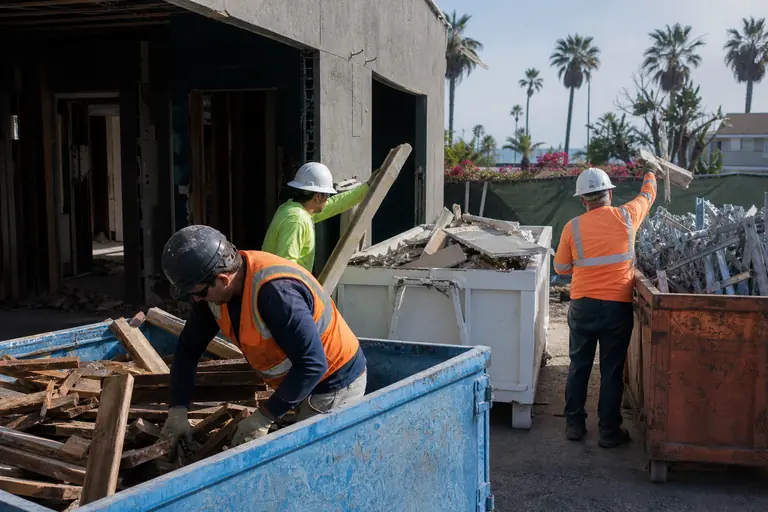
Construction waste diversion means keeping debris out of landfill through reuse, recycling and salvage, and on most California jobs it’s required. CALGreen sets a minimum of 65 percent diversion for nonhazardous construction and demolition waste, and some jurisdictions require more or add deposits and reporting. Plan it before demolition starts: write a waste management plan, choose sorting or mixed loads, line up facilities, and collect weight tickets from day one.
Know the requirement on this job
CALGreen, the state green building code, applies to most new construction and many additions and alterations. Our guide to CALGreen requirements for contractors covers the full code. On diversion, the key points are the 65 percent minimum, a waste management plan and proof of where the material went.
Local rules add to that. In the City of San Diego, the Environmental Services Department runs a construction and demolition debris diversion program tied to permits, which has included a refundable deposit returned when you document diversion. Other cities in the county have their own forms, deposits or certified facility lists. Check the jurisdiction’s requirements at the permit stage, not at final.
Write a waste management plan
A good plan is short and specific. It should answer:
- What materials will the job generate, and roughly how much? Demolition debris, concrete, wood, metal, drywall, cardboard, packaging.
- Which materials will be separated on site, and which will go out in mixed loads?
- Which facilities will take each stream, and what diversion rate do they report?
- Who on the crew is responsible for bins, signage and collecting tickets?
- How will you report diversion to the jurisdiction at the end of the job?
Include the plan in your bid where you can. Owners and general contractors increasingly ask how you’ll handle waste, and a written plan answers that before they ask.
Price diversion honestly in the estimate. Separate bins cost more in rentals and pulls, but clean concrete, metal and wood often cost less to drop off than mixed debris or trash. Ask your hauler for prices on each option and run the numbers for the job’s expected waste mix. On many jobs the difference is small, and on some, sorting comes out cheaper.
Sorting on site vs mixed loads
There are two main approaches, and many jobs use both.
- Source separation: separate bins for concrete, metal, clean wood, drywall and cardboard. Higher diversion rates and sometimes lower tipping fees, especially for clean concrete and metal, which may have value. It needs space and crew discipline.
- Mixed construction and demolition loads: one bin, sent to a facility that sorts it. Easier on tight sites, but your diversion credit depends on that facility’s reported rate, so choose carefully.
- Hybrid: separate the heavy, high-value streams like concrete and metal, and send the rest mixed. Often the most practical choice on small commercial jobs.
Some jurisdictions publish lists of certified construction and demolition facilities with their diversion rates. Using a certified facility can simplify reporting. Ask your hauler which facility your loads go to, and confirm that the facility’s tickets show weight, material type and date, since that is what the jurisdiction will want to see.
Don’t forget the small streams. Cardboard and packaging from deliveries, pallets, and food waste from crews add up over a long job. A cardboard bin near the material drop area and a deal with a supplier to take back pallets are cheap wins.
Salvage and reuse
Reuse counts, and it can save money. Before demolition, walk the site and tag what can be salvaged: doors, cabinets, fixtures, lighting, flooring, lumber and equipment. Reuse outlets such as Habitat for Humanity ReStores accept some building materials, and some contractors sell or reuse items on other jobs. Careful deconstruction takes more labor than demolition, so price it, but it reduces hauling and disposal costs and gives you a strong story for the owner.
Handle hazardous materials separately. Asbestos, lead paint, fluorescent lamps, batteries, treated wood and some electronics need specific handling and disposal, and they don’t count toward diversion. Test older buildings before demolition.
Run it on site and keep the records
Diversion plans fail on site when bins are unclear or nobody watches them. Label every bin with large signs, in English and Spanish where the crew needs it. Brief subcontractors at the start, since they generate much of the waste. Keep contaminated material out of clean bins, because one load of trash in the concrete bin can turn a recyclable load into landfill.
Collect every weight ticket and facility report as loads leave. Store them in one place, ideally scanned weekly. At the end of the job, total them by material and destination to calculate your diversion rate. That number is what the jurisdiction needs, and it’s also proof you can use in your next bid. A contractor who can show actual diversion rates from recent projects has an advantage over one who only says they recycle.
How the chamber helps
The San Diego Green Chamber connects contractors with green building and construction firms, recyclers and haulers who handle construction debris, so you can find facilities and reuse outlets through peers you trust. Every member commits to reducing energy and water use, and the chamber offers education, resources and a unified voice on local building policy. See what membership includes.
Questions
How much construction waste must be diverted in California?
CALGreen requires at least 65 percent of nonhazardous construction and demolition waste to be diverted, unless the local jurisdiction requires more.
Is a waste management plan required?
CALGreen generally requires one for covered projects, and many jurisdictions have their own forms. Write it before demolition starts.
Is it better to sort on site or use mixed loads?
Sorting usually gives higher diversion and can lower costs for concrete and metal. Mixed loads suit tight sites, but depend on the facility’s diversion rate.
What records do we need to prove diversion?
Weight tickets and facility reports for every load, totaled by material and destination at the end of the job.
Prove it. Get referred for it.
Join the San Diego Green Chamber to get listed, introduced and referred by businesses that check.