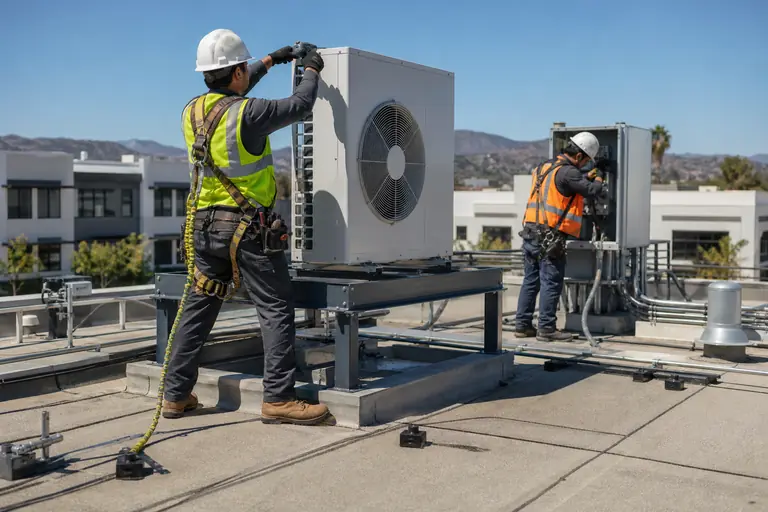
All-electric buildings use electric heat pumps for space and water heating, and electric or induction equipment for cooking, with no gas service. In San Diego, state energy code is pushing new construction this way, and some cities have local rules, though their status has shifted since 2023. For builders, the main issues are early electrical service planning with SDG&E, correct heat pump design and clear cost comparisons for owners.
Where the rules stand
California’s energy code (Title 24 Part 6) has moved new buildings toward electric heat pumps over its last few update cycles, mainly by making heat pumps the baseline design in many building types. Gas is not banned statewide, but a mixed-fuel building often has to do more elsewhere to comply. Our guide to the Title 24 energy code covers the compliance side.
Locally, several San Diego County cities adopted reach codes requiring or favoring all-electric new construction. In 2023, a federal appeals court ruling in a case involving Berkeley’s gas ban led many California cities to pause, repeal or rewrite these rules. Some San Diego County cities now rely on energy-performance reach codes instead. The City of San Diego’s Climate Action Plan sets building decarbonization goals. State legislation in 2025 (AB 130) also limits new local residential building standards until mid-2031. Rules differ by city and keep changing, so check with the building department where the project sits before design starts.
Plan electrical service first
The biggest schedule risk on an all-electric project is often the electrical service, not the equipment. Removing gas loads moves that demand onto the electric service, and larger services can need transformer upgrades from SDG&E with long lead times.
- Calculate the full electric load early, including heat pumps, water heating, cooking, EV charging and future tenants.
- Use load management, such as EV charging controls or panel sharing, to avoid oversizing service.
- Submit the service application to SDG&E as soon as the load is known.
- Ask about lead times for transformers and switchgear and build them into the schedule.
- Leave panel space and conduit for future solar, batteries and chargers.
Skipping gas service also saves money: no gas line extension, no meter, no gas piping and fewer roof penetrations. Put those savings next to the electrical costs when you present the comparison.
Heat pumps in a San Diego climate
San Diego’s mild coastal climate suits heat pumps well. Heating loads are small on the coast and cooling loads are moderate, which means equipment runs efficiently most of the year. Inland valleys see hotter summers and cooler winter nights, so sizing and equipment selection matter more in El Cajon or Escondido than in Carlsbad.
- Space heating and cooling: packaged rooftop heat pumps, split systems and variable refrigerant flow systems are all common in commercial work.
- Water heating: heat pump water heaters need space, air volume, condensate drainage and sometimes ducting. Central systems for larger buildings need careful design and storage sizing.
- Refrigerants: refrigerant rules are changing, so confirm that the equipment you specify meets current California requirements.
Commissioning matters. A heat pump with poor controls or the wrong setpoints will disappoint the owner and get blamed on the technology. Train the building operator on how the system behaves, since heat pumps deliver steadier, lower-temperature heat than a gas furnace and people used to gas sometimes crank the thermostat or switch on backup heat. A short handover session and a one-page guide prevent most complaints.
Noise and placement deserve attention on tight urban sites. Outdoor units on rooftops or side yards near neighbors should be located and screened with sound in mind, and local zoning may set limits. Check before you finalize equipment locations.
Commercial kitchens and other hard cases
Restaurants are where all-electric gets the most pushback. Induction ranges and electric combination ovens are fast and keep the kitchen cooler, but chefs used to gas need time on the equipment. Arrange a demo, budget for new cookware, and size the electrical service for the full kitchen line. Some process loads, like certain manufacturing equipment, may need a project-specific approach. Mixed-use and multifamily buildings with central water heating also need early design attention, since storage tanks and heat pump arrays take room that has to be planned into the building.
Costs and incentives
First costs vary by project. Owners should see a full comparison: equipment, electrical upgrades, avoided gas infrastructure, energy costs on current SDG&E rates and maintenance. Pairing the building with solar and storage can change the operating cost picture significantly. Incentive programs from SDG&E and the state come and go, and federal tax incentives changed in 2025. Check current terms and talk to your accountant before you count on any of them.
For builders, all-electric experience is a competitive edge. Owners and developers want contractors who can deliver on schedule without utility surprises. Document your completed projects, including service sizes, equipment and how the building performs, and use that record in your bids.
How the chamber helps
The San Diego Green Chamber connects builders with green building and construction firms, electricians, HVAC contractors and solar installers who work on all-electric projects, so you can find trusted partners through peers. Every member commits to reducing energy and water use, and the chamber offers education and a unified voice on building policy. See what membership includes.
Questions
Are gas appliances banned in new San Diego buildings?
Not statewide. State energy code favors heat pumps, and some cities have local rules, many revised after a 2023 court ruling. Check with the city where you are building.
Do heat pumps work well in San Diego?
Yes. The mild coastal climate suits them well. Inland projects with hotter summers need more careful sizing and equipment selection.
What is the biggest risk on an all-electric project?
Electrical service. Larger services can require utility transformer upgrades with long lead times, so calculate loads and apply to SDG&E early.
Are all-electric buildings more expensive?
It depends on the project. Electrical upgrades can add cost, but skipping gas service saves on line extensions, meters and piping. Compare the full picture.
Prove it. Get referred for it.
Join the San Diego Green Chamber to get listed, introduced and referred by businesses that check.