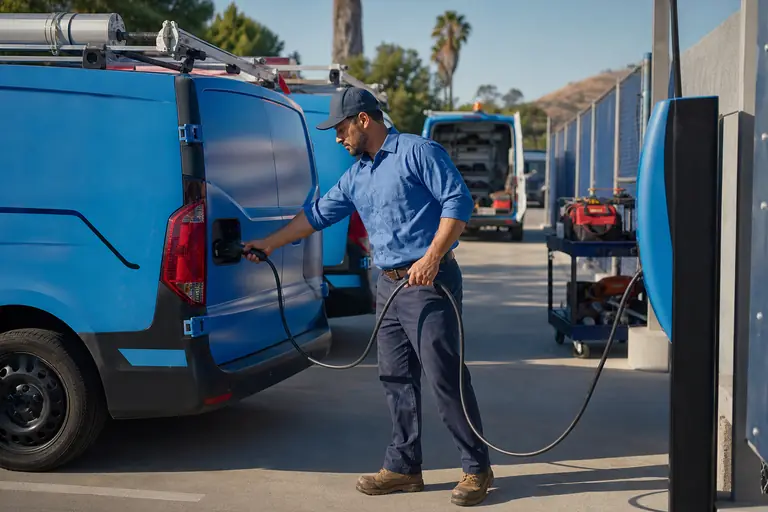
To electrify a small business fleet, start with data on how each vehicle is actually used, replace the vehicles whose routes fit today’s electric models first, and plan depot charging before the first vehicle arrives. Compare total cost of ownership, not sticker price. Most small San Diego fleets with predictable daily routes and overnight parking can move a meaningful share of their vehicles to electric now, then add more as models, prices and charging improve.
Start with your duty cycles
A duty cycle is what a vehicle does on a normal day: miles driven, stops, payload, idle time and where it parks overnight. It tells you which vehicles are ready to switch.
- Pull a few months of mileage data from telematics, fuel cards or simple driver logs.
- Note each vehicle’s daily miles, longest regular day, payload and towing needs.
- Record where each vehicle parks overnight and for how long.
- Flag the vehicles due for replacement in the next two to three years.
Vehicles that drive predictable routes, return to a yard every night and don’t tow heavy loads are the best first candidates. Service vans, delivery vehicles and pool cars in San Diego often fit that profile. Long rural routes into the backcountry or heavy towing up grades may need to wait.
Compare total cost of ownership
Electric vehicles usually cost more to buy but less to fuel and maintain. The only fair comparison is total cost of ownership over the years you plan to keep the vehicle.
- Purchase or lease price, minus any incentives you actually qualify for.
- Energy cost: electricity at your SDG&E or community choice rate versus fuel, based on your real miles.
- Maintenance: no oil changes, fewer brake jobs and fewer moving parts.
- Charging infrastructure: chargers, electrical work and any service upgrade.
- Insurance and resale value, which vary by model.
- Downtime: a vehicle that can’t finish its route costs money, so match range to the duty cycle with a margin.
San Diego’s high electricity rates make charging strategy important. Charging overnight or midday at off-peak rates costs far less than charging in the late-afternoon peak. Our guide on cutting fleet fuel costs covers other ways to bring operating costs down.
Plan depot charging early
Charging is where fleet projects stall. Electrical upgrades and utility work can take months, so start before you order vehicles.
- Have a licensed electrician assess your service and panel capacity at the yard.
- Talk to SDG&E early about your planned load. Larger projects may need utility-side upgrades, and SDG&E has offered fleet programs that help with make-ready infrastructure. Check what is currently available.
- Match charger power to dwell time. Vehicles parked overnight usually need only Level 2. Fast charging is for vehicles that turn around quickly.
- Use managed charging software to stagger sessions and avoid demand spikes.
- If you lease your yard, get the landlord’s agreement in writing before you start.
- Install extra conduit for future chargers while the ground is open.
If drivers take vehicles home, home charging with reimbursement may work better than depot charging. Set a clear reimbursement policy and ask your accountant how to structure it.
Incentives and rules to check
Incentives change often, so treat this as a list of places to look rather than a promise. CARB’s HVIP program has offered vouchers for medium- and heavy-duty zero-emission trucks and vans. The California Energy Commission has funded fleet charging through programs such as EnergIIZE. The San Diego County Air Pollution Control District has administered grant programs for cleaner vehicles and equipment. SDG&E and community choice providers have offered rebates or programs at different times. Under 2025 federal legislation, the commercial clean vehicle credit (section 45W) ended for vehicles acquired after September 30, 2025, and the charger credit ended for equipment placed in service after June 30, 2026, so ask your accountant what still applies.
On rules, CARB stopped enforcing the private and drayage fleet parts of its Advanced Clean Fleets regulation in 2025 after withdrawing its federal waiver request, and its board then voted to repeal those parts. Requirements for state and local government fleets continue, with some deadlines pushed back. If you contract with public agencies, they may ask about your fleet. Check CARB’s site for the current status. Customers ask too. Some large shippers and property managers now ask vendors about fleet emissions in onboarding questionnaires, so a documented plan helps even where no rule applies.
Roll out in phases
- Pick one or two vehicles with the clearest fit and replace them first.
- Track real range, energy cost, maintenance and driver feedback for a few months.
- Train drivers on charging habits and regenerative braking.
- Adjust your charging plan and electrical capacity based on what you learn.
- Replace more vehicles at their normal replacement dates.
- Document results: miles driven on electricity, fuel avoided and cost per mile. Those numbers belong in bids.
Expect a learning curve. Drivers adjust quickly, but dispatchers may need to rethink route assignments so the right vehicle gets the right job. Keep a gas or diesel vehicle in the mix for edge cases while you learn, and revisit the plan each year as new models arrive.
How chamber membership helps
Ready to pick a vehicle? Read comparing electric delivery vans.
Fleet electrification goes faster when you can ask someone who has done it. The San Diego Green Chamber connects fleet operators with EV dealers, charger installers and electricians, and every member commits to reducing energy and water use. Find partners in the Member Business Directory, see how the chamber supports the EV and clean tech industry and trade notes at free networking events co-hosted with San Diego Green Drinks. Learn about membership.
Questions
Which vehicles should I electrify first?
Start with vehicles that run predictable daily routes, return to a yard each night, don’t tow heavy loads and are due for replacement soon.
Are electric fleet vehicles cheaper to run?
Usually, yes, because electricity and maintenance typically cost less than fuel and engine service. Charging off-peak matters in San Diego, where peak electricity rates are high.
How long does it take to install fleet charging?
Small Level 2 projects can be quick, but electrical upgrades and utility work can take months. Talk to an electrician and SDG&E before you order vehicles.
Does the Advanced Clean Fleets rule apply to my small business?
Probably not. CARB stopped enforcing the private fleet parts of the rule in 2025 and its board later voted to repeal them, while public fleet requirements continue. Check CARB’s site for the current status.
Prove it. Get referred for it.
Join the San Diego Green Chamber to get listed, introduced and referred by businesses that check.