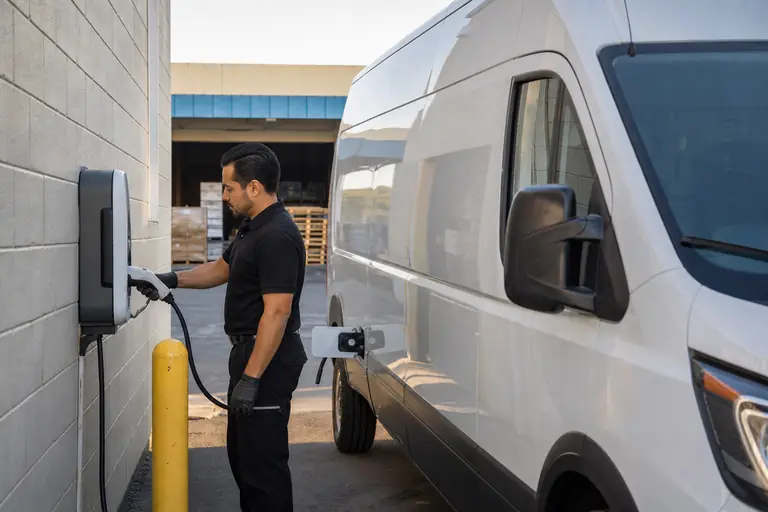
Electric delivery vans make sense for San Diego small businesses whose vans run predictable daily routes, return to base each night and can charge on site. Fuel and maintenance costs are usually lower than gas or diesel, while purchase prices are higher. Compare total cost of ownership over the years you plan to keep the van, including charging setup, SDG&E rates and any vouchers, before you decide.
Planning the whole switch, not just the van? See how to electrify a small business fleet.
Is your operation a good fit?
Not every route suits an electric van today. Check your real daily miles first, using odometer logs or telematics data from a few typical weeks.
- Good fit: local deliveries, service calls and routes that stay within the county, with vans parked overnight where you can charge.
- Workable with planning: routes that occasionally run long, such as trips to Temecula or the Imperial Valley, if public fast charging is available along the way.
- Poor fit for now: long or unpredictable daily mileage, heavy towing, or vans that park overnight on the street with no charging access.
Remember that rated range drops with heavy payload, heat, hills and freeway speed. East County climbs and inland summer heat use more energy than flat coastal routes. Plan around a cushion, not the brochure number.
Models and what to compare
Several manufacturers now sell electric cargo vans in Class 2 and Class 3, including models from Ford, Mercedes-Benz and Rivian. Availability, pricing and specs change each model year, so get current quotes from dealers. When you compare, look past headline range.
- Cargo volume and payload with your shelving or upfit installed.
- Charging speed, both on a Level 2 charger and at DC fast chargers.
- Warranty on the battery and drive system.
- Service options near you, since not every dealer services commercial EVs.
- Telematics and software for tracking charge levels across the fleet.
Charging at your site
Most small fleets charge overnight on Level 2 chargers at their own lot. That is usually enough for a day of local driving. The steps below keep the project on track.
- Check your electrical capacity. Have an electrician review your panel and service. One or two chargers may fit as is. More may need an upgrade.
- Talk to SDG&E early. If you need more service, the utility has to plan for it, and that can take time. SDG&E has offered programs that help fleets with charging infrastructure, so ask what is current.
- Get landlord approval if you lease. Charger installs touch the building, so put the agreement in writing.
- Pull permits. Your city requires electrical permits for charger installation. Cities and the County have worked to speed EV charger permitting.
- Pick a rate plan. SDG&E has business EV rate options. Charging overnight in off-peak hours is usually far cheaper than charging in the late afternoon and evening peak.
Our guide on workplace EV charging goes deeper on equipment choices and costs.
Incentives and the total cost math
California’s Hybrid and Zero-Emission Truck and Bus Voucher Incentive Project, known as HVIP, offers point-of-sale vouchers on eligible zero-emission vehicles from Class 2b up, which includes many cargo vans. The voucher comes off the price through a participating dealer. Funding rounds open and close, so check the HVIP site for current availability. The federal commercial clean vehicle credit (section 45W) ended for vehicles acquired after September 30, 2025, so ask your accountant before counting on any federal tax benefit.
Build a simple comparison over five to eight years. On the cost side, include purchase price after vouchers, charger and installation, insurance and electricity at your expected rate. On the savings side, include fuel you no longer buy, fewer oil changes and lower brake wear from regenerative braking. Gas prices in California are among the highest in the country, which tends to favor electric for high-mileage local routes.
Start with one or two vans
A pilot gives you real numbers before you commit the fleet. Put the first electric van on your most predictable route, track energy use, driver feedback and downtime for a few months, then decide on the next purchase. Drivers who try the vans often become the strongest advocates, since the vans are quiet and smooth in stop-and-go traffic.
Plan for the details that trip up first-time fleets. Decide who plugs in the van at the end of each shift and what happens if they forget. Set charging schedules in the charger software so vans charge off-peak automatically. Train drivers on regenerative braking and on reading range estimates, which change with load and weather. Line up a service shop that handles commercial EVs before you need it, and ask your insurer how coverage and premiums change for electric vehicles.
Clean deliveries also help in bids. Customers with their own climate targets increasingly ask vendors how they deliver. Firms on our clean transportation and logistics page can answer with data from their own vans.
How chamber membership helps
San Diego Green Chamber members commit to reducing energy and water use, and a cleaner fleet is a visible step. Membership gives you education and resources on programs like HVIP, a Member Business Directory listing and free networking events co-hosted with San Diego Green Drinks, where you can meet charger installers, electricians and fleet operators who have already made the switch. See our membership page for details.
Questions
How far can an electric delivery van go on a charge?
It depends on the model, payload, temperature, hills and speed. Plan routes with a cushion below the rated range, and test on your actual routes before buying several vans.
Do I need a fast charger for electric vans?
Most small fleets do fine with Level 2 chargers overnight. DC fast charging helps for unusually long days but costs more to install and use.
Are there incentives for electric vans in California?
California’s HVIP program offers point-of-sale vouchers for eligible zero-emission vans and trucks when funding is open. The federal commercial clean vehicle credit ended for vehicles acquired after September 30, 2025, so confirm any tax questions with your accountant.
Prove it. Get referred for it.
Join the San Diego Green Chamber to get listed, introduced and referred by businesses that check.