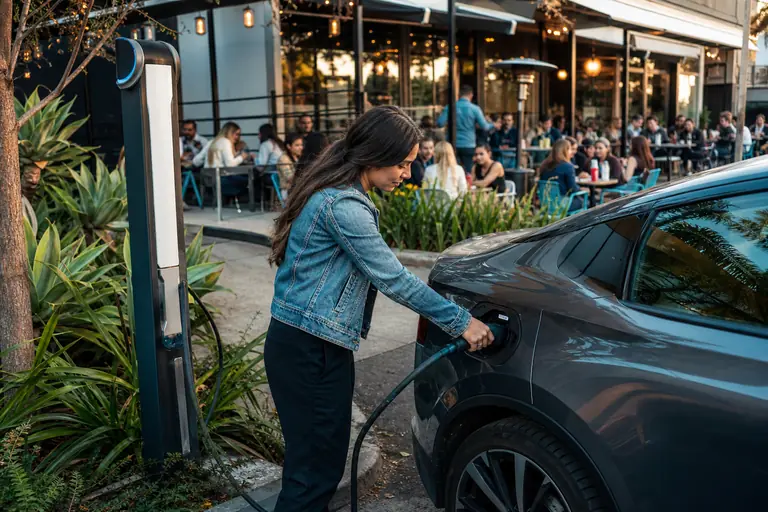
EV charging can bring customers to retail stores and restaurants when the charging time matches how long people stay. For most shops and restaurants that means Level 2 chargers, placed where drivers can see them and priced so spaces turn over. Treat a charger as a customer amenity with a budget and a measurable goal, and judge it on sales, not on how green it looks.
Why charging can drive traffic
EV drivers plan stops around chargers. Charging apps and the navigation built into most EVs show drivers where they can plug in, and many drivers pick a place to eat or shop because it lets them charge while they wait. A charger listed in those apps puts your business on a map that a specific group of drivers checks every day. In San Diego County, where EVs are a common sight on every freeway, that group is not small.
The draw is strongest when the charge time and the visit line up. A diner who spends an hour at dinner can add meaningful range on a Level 2 charger. A shopper who spends ten minutes picking up coffee gains almost nothing from Level 2, and a fast charger for that visit can cost far more than the sale is worth. Knowing your average visit length is the first step.
Match the charger to the visit
- Level 2 (240 volt): suited to visits of 45 minutes to a few hours. Restaurants, salons, gyms, specialty retail and shopping centers. Lower equipment cost and usually less electrical work.
- DC fast charging: suited to 15 to 40 minute stops near busy corridors. Much higher hardware cost, larger electrical service, and demand charges on your SDG&E bill that hurt when usage is low.
- Third-party or landlord-owned sites: a charging network or the property owner installs and runs the chargers, and tenants get the traffic without owning hardware. You give up pricing control in exchange.
Ask how long your typical customer stays. POS timestamps, reservation data or a week of watching the lot will tell you. That number decides the charger type more than any sales pitch.
The costs that decide whether it pays
Hardware is rarely the biggest line item. Electrical work is. Trenching across a parking lot, upgrading a panel or requesting new service from SDG&E can cost more than the chargers and can add months to the schedule. Get a site assessment from a licensed electrician before you commit to a number of ports, and ask which spaces are cheapest to reach from your existing panel.
Then price the running costs honestly.
- Electricity: on a time-of-use commercial rate, the dinner rush falls in SDG&E’s evening peak window. Check your rate schedule with SDG&E and set session pricing to cover it.
- Demand charges: several cars charging at once can set a new monthly peak. Load management software can cap total draw across ports.
- Network fees: most networked chargers carry an annual subscription that covers payment, app listing and remote support.
- Maintenance: cables get run over and screens fail, and coastal salt air is hard on outdoor equipment. Budget for a service agreement and a response time.
Incentives can cut the upfront cost, but programs open, fill and close often. Our guide to EV charger incentives for California businesses covers where to look and what to confirm before you apply.
Pricing, rules and access
Free charging draws the most drivers. It also draws people who park for four hours and never come inside. Most businesses do better with a modest per-kWh price, or a free first hour for paying customers with an idle fee once the car is full. Validation through your POS can tie free charging to a purchase, which keeps the spaces working for you.
Public chargers in California come with rules that private ones do not. State rules cover payment options at publicly available chargers, and the California Building Code sets accessibility requirements for EV spaces, including accessible spaces and path of travel. Your electrician, the charger vendor and your city’s permitting office should confirm what applies to your site. If you lease, get the landlord’s written approval first, including who owns and maintains the equipment when the lease ends.
How to measure the draw
If you can’t measure it, you can’t tell whether the chargers earn their parking spaces. Set a baseline before installation and track a short list of numbers after.
- Pull 90 days of sales, ticket size and traffic data before the install.
- Use the charger network dashboard to count sessions, session length and repeat drivers.
- Offer a charging-only promo code or POS button to tie sessions to tickets.
- Compare ticket size and visit length for charging customers against everyone else.
- Review at six and twelve months, then adjust pricing, idle fees or hours.
Restaurants often find the payoff in slow hours. A charger that fills a table at 3 p.m. on a Tuesday is worth more than one sitting behind a full dining room on Friday night. Keep hours, pricing and status accurate in the charging apps. A broken or blocked charger earns bad reviews fast, and drivers remember.
How the chamber helps
The San Diego Green Chamber connects you with the installers, electricians and EV and clean tech businesses that scope and build these projects, so you can get referrals from peers instead of cold quotes. Every member commits to reducing energy and water use, which gives a charger project a place in a larger plan. Your Member Business Directory listing also helps EV drivers and sustainability-minded customers find you. See what membership includes.
Questions
Do EV chargers actually bring customers into restaurants?
They can, when the visit is long enough for a useful charge and the charger is listed in the apps drivers use. Track sessions against sales so you know whether it works for your location.
Should a small retailer install a fast charger?
Usually not. Fast chargers cost much more to buy and run, and they suit short stops on busy corridors. Level 2 fits most shops and restaurants better.
Should we charge customers for charging?
Most businesses do better with a modest price or a free first hour for paying customers, plus an idle fee. Fully free charging tends to fill spaces with long-term parkers.
What do we need if we lease our space?
Written landlord approval that covers installation, electrical access, ownership of the equipment and what happens at lease end. Get it before you pay for design work.
Prove it. Get referred for it.
Join the San Diego Green Chamber to get listed, introduced and referred by businesses that check.