You reduce waste hauling costs by paying only for the container space and pickups you actually use, keeping recycling and organics clean so you avoid contamination fees, and sending less material to the trash in the first place. Start with your last 12 months of invoices and a look inside your containers on pickup day. Many businesses find their service hasn’t changed in years even though the business has.
Read the invoice like an auditor
Hauling bills look simple, but they hide several separate charges. Pull a year of invoices and list every line item. Look for these:
- Base service: container size times pickup frequency, for each stream (trash, recycling, organics).
- Overage or extra pickup charges: fees when a container is overfull or you call for an extra pickup.
- Contamination fees: charges when recycling or organics loads contain trash.
- Access or service fees: charges for pushing containers out from an enclosure, opening gates or long walks to the truck.
- Container rental and compactor fees, plus any fuel or environmental surcharges.
- Rate increases: franchise rates usually change on a set schedule. Know when yours change.
Recurring overage charges mean you need a different service level. Recurring contamination fees mean your sorting needs work. Both are fixable. Also check that you’re billed for the containers you actually have. Businesses that moved, downsized or changed tenants sometimes keep paying for a container nobody uses. Compare the invoice to what is physically in your enclosure, and ask for a credit if they don’t match.
Check what’s actually in the container
Look in each container right before pickup, for two or three weeks. Take a photo each time. You want to know two things: how full it is, and what’s in it.
A trash container that is half empty at pickup means you’re paying for air. Ask your hauler to reduce the size or the frequency. A trash container stuffed with cardboard means a cheaper recycling service could take that volume. Boxes that aren’t broken down fill containers fast, so flattening them is the cheapest fix there is.
Watch for seasonal swings too. A restaurant in Pacific Beach or a shop in Coronado may need more service in summer than in January. Ask your hauler whether you can change service levels by season instead of paying for peak volume all year. Note any days the container overflows and what caused it, such as a big delivery or a weekend event, so you can plan around those days instead of paying for them every week.
Right-size service with your hauler
In most of San Diego County, your city contracts with a franchise hauler, and rates for each container size are set in that agreement. In the City of San Diego, businesses choose among franchised haulers, so it can pay to compare. Either way, you control container size, frequency and how waste is split across streams.
- Bring your invoice summary and container photos to a service review with your hauler.
- Ask for the price of each container size and frequency option for every stream.
- Model two or three alternatives, such as a smaller trash container with a larger recycling container.
- Make the change, then watch fill levels for a month before changing anything else.
- Repeat the review every year, or after any big change in business volume.
Recycling and organics service is often, though not always, priced differently than trash. Check your city’s rate sheet or ask your hauler how each stream is priced before you assume a swap saves money.
Equipment and shared service
Equipment can cut pickups, and it costs money, so do the math first.
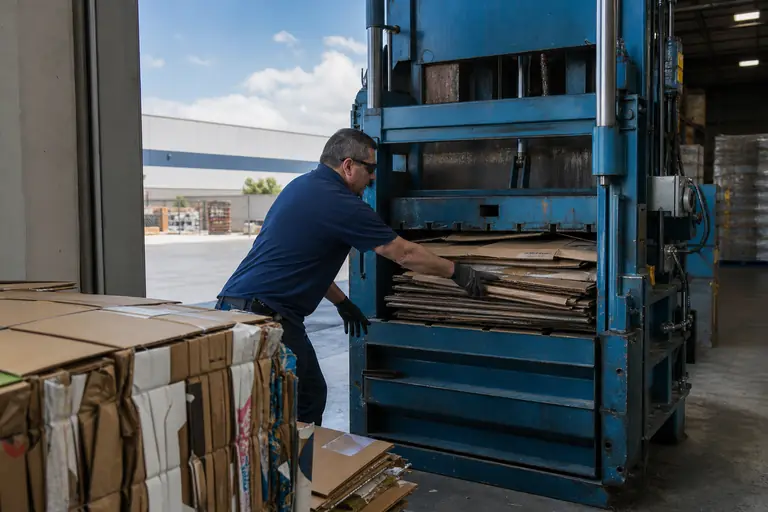
- Cardboard balers suit businesses that generate a lot of cardboard. Baled cardboard takes less space and may be accepted by a recycler, sometimes with a rebate depending on market prices.
- Compactors reduce pickups for high-volume trash, but they carry rental and maintenance costs and can raise per-pickup charges.
- Shared enclosures with neighboring tenants can cut costs if your property manager coordinates service and billing fairly.
- Locks on enclosures stop neighbors and passersby from filling your containers, which is a common cause of overage charges.
Make less waste
The cheapest material to haul is the material you never receive. Ask suppliers to ship in returnable totes or with less packaging. Return pallets to the vendor or sell them. Buy cleaning and break room supplies in bulk. For food businesses, cutting food waste through better ordering and portioning reduces the heaviest stream at once. Our guide to zero waste goals for small businesses lays out a realistic plan to keep reducing.
Keep the records of what you changed and what it saved. Those numbers are also proof you can show a customer or a bid reviewer who asks about your waste practices, which is worth more than a generic statement about recycling.
How the chamber helps
San Diego Green Chamber members include recycling and waste businesses and owners who have already gone through hauler reviews, balers and enclosure fixes. Membership gives you a network where you can ask what worked and who to call, plus education and resources on practical operations. Every member commits to cutting energy and water use, and lower waste costs often come from the same habits. See what membership includes.
Questions
How can a small business lower its trash bill?
Right-size your trash container and pickup frequency, move cardboard and organics to their own service, break down boxes and lock your enclosure. Then ask your hauler for a service review.
Are contamination fees common?
Yes. Haulers can charge when recycling or organics loads contain trash. Clear labels, the right bins in the right places and quick staff training reduce them.
Can we choose our own hauler in San Diego?
It depends on the city. Most county cities have an exclusive franchise hauler. The City of San Diego uses several franchised haulers for commercial service.
Is a cardboard baler worth it?
It can be for businesses with steady, high cardboard volume. Compare the equipment cost to the pickups it would save and what recyclers will accept.
Prove it. Get referred for it.
Join the San Diego Green Chamber to get listed, introduced and referred by businesses that check.