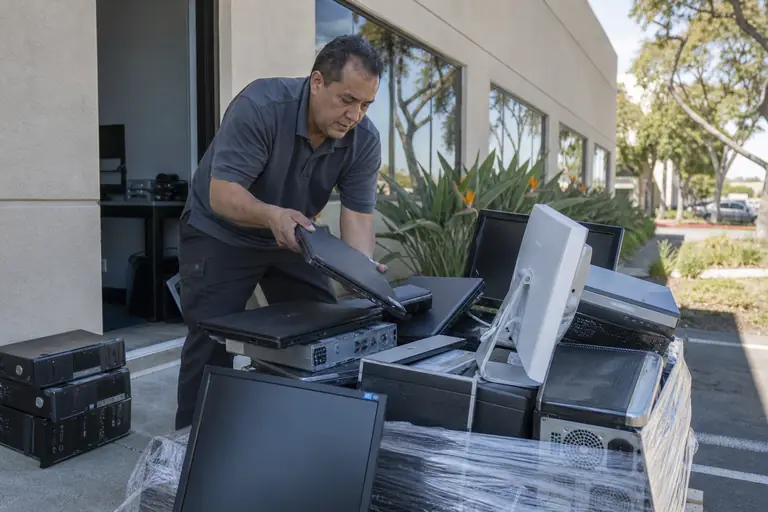
San Diego businesses can’t put most electronics, batteries or fluorescent lamps in the trash. California treats them as hazardous or universal waste, so they must go to an authorized recycler or collector. The safe process is simple: wipe or destroy data first, use a recycler that holds a recognized certification, and keep the paperwork showing where your equipment went.
What counts as e-waste
For a typical business, e-waste includes:
- Computers, laptops, tablets and servers.
- Monitors, TVs and other devices with screens.
- Phones, printers, copiers, networking gear and point-of-sale terminals.
- Batteries of every type, including the lithium batteries inside devices and tools.
- Fluorescent tubes and CFLs, which contain mercury. These come up often during LED lighting retrofits.
- Cords, chargers, power supplies and small electronics.
The California Department of Toxic Substances Control (DTSC) sets the universal waste rules that cover many of these items. CalRecycle runs the state program for covered electronic devices such as screens. The rules apply to businesses of every size, so a three-person office tossing an old monitor is breaking the same rule as a large company.
Protect your data first
A recycled computer with an intact hard drive is a data breach waiting to happen. Customer records, employee files, passwords and financial data can all be recovered from drives that were only deleted or reformatted.
- Keep an inventory of every device leaving the business, with serial numbers.
- Back up anything you need, then sign out of accounts and remove devices from management systems.
- Wipe drives with a recognized data sanitization method, or have them physically shredded. Phones and tablets need a full factory reset after encryption is on.
- Get a certificate of data destruction from your recycler or IT vendor, listing serial numbers.
- Store the certificate with your records, along with the inventory, so you can match every serial number to a destruction record. If you handle health, financial or legal data, ask your attorney or compliance advisor what you must document.
Copiers and printers often have internal drives too. Ask your leasing company how it handles them when the lease ends. The same goes for security camera recorders, network storage boxes and old phone systems, which are easy to forget.
Choosing a recycler
Electronics recyclers vary a lot. Some reuse and refurbish. Some shred and recover materials. A few ship loads overseas with little control over where they end up. Ask direct questions.
- Certification: look for recognized third-party certifications such as e-Stewards or R2, which audit how recyclers handle material and data.
- State standing: ask whether they are approved under California’s covered electronic waste program for screens.
- Data handling: ask how they wipe or destroy drives, and whether they provide serialized certificates.
- Downstream: ask where the material goes after them, and whether they export.
- Paperwork: confirm you’ll get a receipt or bill of lading showing what they took and when.
- Cost: some items carry value and may be free to recycle. Others, like old screens, may carry a fee. Get the price in writing.
Working equipment may be worth more as a donation or resale than as scrap. Schools and nonprofits sometimes accept recent devices, but only after the data is wiped. Some IT asset disposition vendors will buy back recent laptops and phones, which can offset the cost of recycling older gear. Ask for a quote that separates resale value from recycling fees.
If you lease equipment, read the return terms before you recycle anything. Leased copiers, phones and computers usually go back to the leasing company, and recycling them by mistake can mean paying for the full device.
Small amounts, batteries and lamps
Not every business has a pallet of old computers. For smaller amounts, many retailers and recyclers accept rechargeable batteries, phones and small electronics. The County of San Diego and some cities run hazardous waste programs that accept material from small business generators by appointment. Eligibility, limits and fees vary, so check with the county and your city before you load the truck.
For batteries, tape the terminals of lithium batteries before storage or transport. Damaged lithium batteries can start fires in trucks and recycling facilities. Store used batteries in a non-metal container away from heat. Store used fluorescent tubes so they don’t break, and send them to a lamp recycler. Your lighting contractor may include removal in an LED project.
Build it into your process
E-waste piles up in closets because nobody owns it, and a closet full of old drives is both a fire risk and a data risk. Set a policy: one person collects retired equipment, wipes or tags it, and schedules a pickup once or twice a year. Track what left and where it went. That record supports your data security practices and gives you a specific answer when a customer asks how you handle e-waste. It also counts toward the reduction targets in our guide to zero waste goals for small businesses.
How the chamber helps
The San Diego Green Chamber connects you with recycling and waste businesses and with members who can recommend recyclers they’ve vetted. Membership includes networking, education and resources, and every member commits to reducing energy and water use. When you need a trusted vendor, a referral from a peer beats a search result. See what membership includes.
Questions
Can businesses throw electronics in the trash in California?
No for most items. Many electronics, all batteries and fluorescent lamps are regulated as hazardous or universal waste and must go to an authorized recycler or collector.
How do we protect data when recycling computers?
Wipe drives with a recognized sanitization method or have them shredded, and get a certificate of destruction listing serial numbers.
What certifications should an e-waste recycler have?
Look for third-party certifications such as e-Stewards or R2, and ask how they handle data and where material goes after them.
Does recycling e-waste cost money?
Sometimes. Equipment with resale or material value may be free, while some items such as old screens can carry a fee. Get prices in writing.
Prove it. Get referred for it.
Join the San Diego Green Chamber to get listed, introduced and referred by businesses that check.