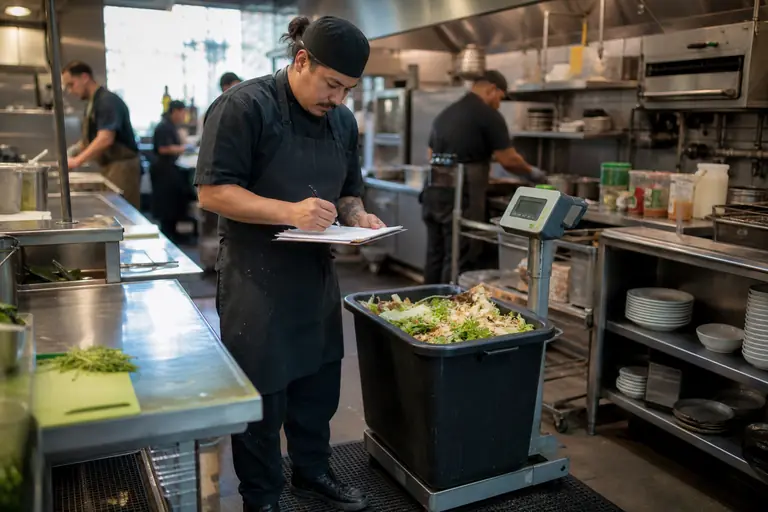
Restaurants cut food waste and save money by measuring what they throw away, then fixing the causes: over-ordering, over-prepping, oversized portions and poor storage. Prevention saves the most, because every pound you don’t waste is a pound you don’t buy. What can’t be prevented should be donated if it is safe to eat and recycled as organics if it isn’t, which California’s SB 1383 already requires of many businesses.
Why food waste is a cost problem first
Wasted food costs you several times. You paid for the ingredient, paid staff to store and prep it, paid for the energy to keep it cold, and then pay a hauler to take it away. For a restaurant running on thin margins, even a small cut in waste goes straight to the bottom line. Waste reduction is one of the few sustainability steps that lowers costs from week one with little or no equipment spending.
The EPA’s food recovery hierarchy puts it in order: reduce waste at the source first, then feed people through donation, then feed animals, then compost or digest what remains, with landfill last. That order also matches the money. Source reduction saves the most.
Measure before you change anything
Most kitchens underestimate their waste until they weigh it. Run a simple tracking period of two to four weeks.
- Set up separate bins for spoilage, prep trim, overproduction and plate waste.
- Weigh each bin at the end of every shift and log the weight with a short note on what was in it.
- Look for patterns: which items, which days and which stations produce the most waste.
- Put a rough cost on the biggest items using your purchase prices.
- Pick the top three causes and work on those first.
Share the numbers with the team. A weekly board showing pounds wasted and what they cost turns waste into something cooks and servers can see, and it gives them a target to beat.
Some restaurants use digital tracking scales or apps that photograph and categorize waste. A clipboard and a floor scale work fine to start.
Prevention tactics that pay off
Ordering and inventory
Order to actual sales, not habit. Use your point-of-sale data to set par levels by day of the week, and adjust for local patterns such as Padres home games, Comic-Con week, summer tourist traffic or a slow January. Rotate stock first in, first out, label and date everything, and check walk-in temperatures daily. Ask suppliers about smaller, more frequent deliveries for perishables, and ask local farms about imperfect produce, which often costs less and works fine in sauces, soups and purees.
Prep and production
Prep in smaller batches more often, especially for items with short holding times. Track what is left at close and adjust tomorrow’s prep. Batch-cook to demand during service instead of filling every hotel pan at once.
Menu and portions
- Cross-use ingredients across several dishes so trim from one becomes a component in another.
- Use the whole product: stems in stocks, bread ends in croutons, fruit trim in house syrups or staff meals.
- Review portion sizes against plate waste. If the same side comes back half eaten, shrink it or make it optional.
- Drop menu items that sell slowly and spoil fast.
- Offer smaller plates or half portions for items with heavy plate waste.
- Train servers to ask about bread and sides instead of serving them by default.
Donate safe surplus food
Under SB 1383, California requires certain businesses to donate the maximum amount of edible food they would otherwise throw away to food recovery organizations. Large grocery stores and food distributors were first. Larger restaurants, hotels and venues above size thresholds followed in a second tier. Even if your restaurant is not covered, donation reduces waste and supports your community.
Federal and California Good Samaritan laws protect businesses that donate food in good faith from liability, provided they follow food safety rules. Talk to an attorney if you have specific questions. Your city or the County of San Diego can point you to local food recovery organizations that pick up from restaurants. Work out storage, labeling and pickup times with them in advance. For guests, offer to-go containers that your recycling or organics program actually accepts, so leftovers that leave the building don’t become a different waste problem.
Recycle what’s left as organics
Trim, spoiled food and plate waste that can’t be donated should go into organics recycling, not trash. SB 1383 requires businesses to subscribe to organics collection or self-haul, and to keep organics out of the trash. Train staff to separate it at every station, and keep plastic and gloves out of the organics bin to avoid contamination charges. Our guide to restaurant organics recycling under SB 1383 covers setup and compliance in detail.
As your prevention work takes hold, your organics and trash volumes should drop. Review your hauling service and right-size it to capture those savings. Restaurants in our sustainable food and restaurants network compare notes on haulers, tracking tools and donation partners.
How chamber membership helps
The San Diego Green Chamber brings together businesses that have committed to reducing energy and water use and want results they can show. Membership offers education and resources on topics like SB 1383, a Member Business Directory listing, advocacy through a unified voice on policy and free networking events co-hosted with San Diego Green Drinks. Explore membership.
Questions
What is the best way to start reducing restaurant food waste?
Weigh and log what you throw away for two to four weeks, sorted by type, then fix the biggest causes first.
Does SB 1383 require restaurants to donate food?
Larger restaurants above certain size thresholds must donate the maximum amount of edible food they would otherwise discard. Check the current thresholds with your city or CalRecycle.
Am I liable if donated food makes someone sick?
Federal and California Good Samaritan laws protect good-faith donors who follow food safety rules. Ask an attorney about your specific situation.
What should happen to food that can’t be donated?
It should go into organics recycling. SB 1383 requires businesses to have organics collection or self-haul and keep food scraps out of the trash.
Prove it. Get referred for it.
Join the San Diego Green Chamber to get listed, introduced and referred by businesses that check.