An energy-efficient commercial kitchen runs equipment only when it is needed, keeps refrigeration tight, controls the exhaust hood and buys ENERGY STAR rated equipment when something wears out. For San Diego restaurants on SDG&E rates, the fastest savings usually come from behavior and maintenance, not new equipment. Upgrades come next, ideally timed with a replacement and paired with available rebates.
Where kitchen energy goes
Kitchens use a lot of energy for their size. Cooking, refrigeration, hot water, ventilation and dishwashing all run for long hours, often at the same time. Much of that energy is wasted as heat into the room, which the HVAC system then has to remove.
The biggest culprits in most kitchens are equipment left on at full temperature between rushes, refrigeration fighting bad gaskets and dirty coils, exhaust hoods running at full speed all day, and hot water heated hotter than needed. None of these show up on a menu, but all of them show up on the SDG&E bill.
No-cost and low-cost fixes
Start with changes that cost little and can begin this week.
- Write a startup and shutdown schedule. List each appliance, when it should turn on and when it goes off or to standby. Most fryers, griddles and ovens reach temperature faster than staff assume.
- Idle or turn off between rushes. Turn off unused griddle sections and fryer vats in slow periods. Lower the temperature on holding equipment.
- Clean refrigeration coils. Dirty condenser coils make compressors work harder. Put coil cleaning on the maintenance calendar.
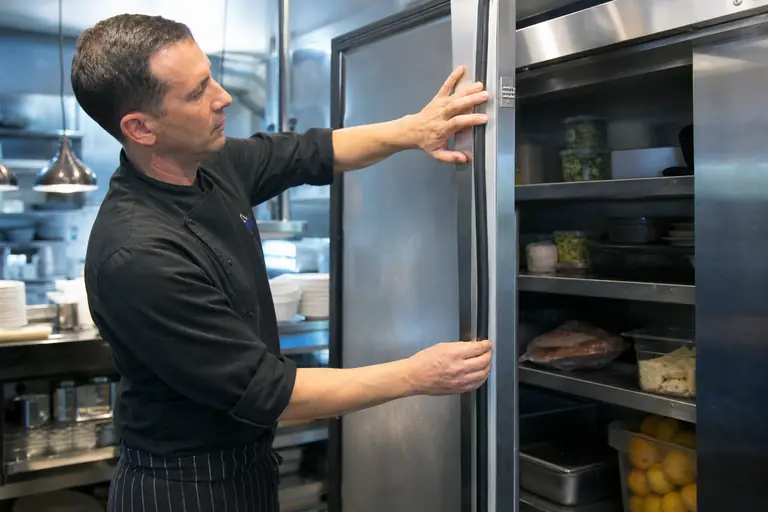
- Replace torn gaskets and fix door closers. Walk-in doors that do not seal pull in warm air all day. Strip curtains help on busy walk-ins.
- Check hot water temperatures. Heat water only as hot as code and your dish machine require, and fix leaking pre-rinse sprayers.
- Load the dish machine fully. Running half racks wastes water, chemicals and the energy to heat both.
Put one person in charge of the schedule. A laminated sheet by the line with on and off times does more than a policy in a binder.
Water and energy are linked in a kitchen. Every gallon of hot water you waste was heated with gas or electricity first. Low-flow pre-rinse spray valves, prompt leak repairs and running the dish machine only when full cut both bills at once. San Diego County imports much of its water, and water and sewer charges add up for restaurants, so the savings show on more than one statement. Ask your water provider about commercial efficiency programs, which the San Diego County Water Authority and local agencies have offered.
Equipment upgrades worth considering
Replace equipment at the end of its life, or sooner when the old unit is clearly a problem. When you buy, compare total operating cost, not just price.
- ENERGY STAR commercial food service equipment. The program rates fryers, griddles, ovens, steamers, holding cabinets, ice machines, dishwashers and refrigeration. Rated models use less energy and often less water.
- Demand control kitchen ventilation. Sensors slow the hood fans when cooking is light and speed them up when it is heavy. That cuts fan energy and the conditioned air you exhaust.
- Induction cooking. Induction puts heat into the pan instead of the room, which keeps kitchens cooler. Many chefs like the control. Check your electrical capacity first.
- Efficient refrigeration. Look for electronically commutated fan motors, better insulation and night curtains on open cases.
- Connectionless steamers. Boilerless models use far less water and energy than older connected units.
Electrification is a growing topic in California kitchens. Switching from gas to electric cooking changes your rate exposure, your electrical service needs and your menu workflow. Plan it with an electrician and your equipment dealer, and look at how electric loads fit into SDG&E’s time-of-use pricing, covered in our guide on time-of-use rates.
Rebates and programs to check
Rebate programs change often, so confirm current terms before buying. SDG&E lists business energy efficiency programs and rebates on its website. California has also run a statewide foodservice instant rebate program through participating dealers, which takes the rebate off the price at purchase. The California Energy Commission and CPUC set the frameworks that fund many of these programs.
Ask your equipment dealer which models qualify before you sign, and keep the specification sheet showing the ENERGY STAR rating. Some programs require pre-approval, and a missed step can cost you the rebate.
Track the results
Savings you cannot show are hard to defend to a partner or an investor. Use your SDG&E online account to download interval data, then compare usage before and after a change, accounting for business volume. Note the date of every change in a simple log. If you plan a bigger project, a commercial energy audit can rank options by payback.
This record also helps when catering clients, venues or corporate buyers ask what you do on sustainability. Restaurants on our sustainable food and restaurants page can show numbers, not slogans.
How chamber membership helps
Every San Diego Green Chamber member commits to reducing energy and water use, so the kitchen is a natural place to start. Membership includes education and resources on programs like these, a Member Business Directory listing and free networking events co-hosted with San Diego Green Drinks, where you can meet efficiency contractors, equipment dealers and other owners who have done the work. Visit our membership page to learn more.
Questions
What uses the most energy in a restaurant kitchen?
Cooking equipment, refrigeration, ventilation and water heating are usually the largest loads. The mix depends on your menu and hours, so look at your SDG&E interval data to see when usage peaks.
Is induction cooking worth it for a restaurant?
It can be. Induction is efficient and keeps the kitchen cooler, but it may require electrical upgrades and compatible cookware. Get an electrician’s assessment before committing.
Are there rebates for energy-efficient kitchen equipment in San Diego?
Programs have been available through SDG&E and statewide instant rebates at participating dealers. Terms change, so confirm eligibility and any pre-approval steps before you buy.
Prove it. Get referred for it.
Join the San Diego Green Chamber to get listed, introduced and referred by businesses that check.