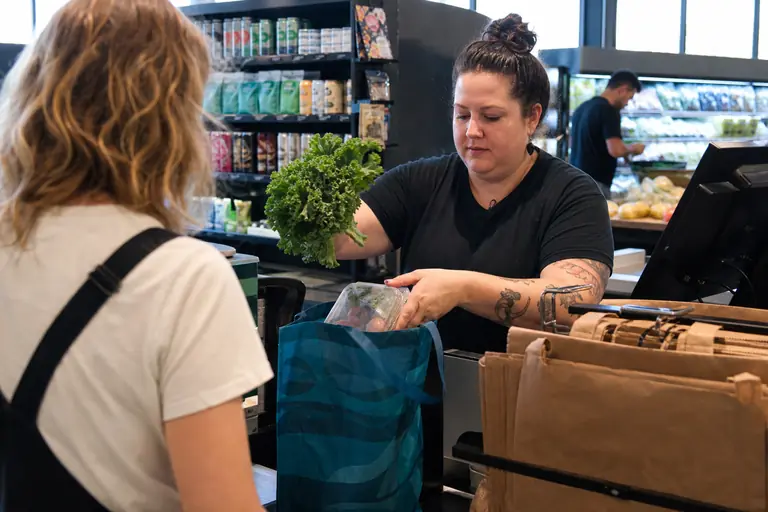
California retailers face several overlapping plastic and packaging laws. The main ones cover checkout bags, single-use foodware and accessories, producer responsibility for packaging under SB 54, rules on recyclable and compostable labels, and beverage container redemption. San Diego stores may also face local ordinances. Which rules apply depends on what you sell, whether you sell under your own brand and whether you serve food.
This is general information, not legal advice. Laws and implementing rules change often, so confirm current requirements with CalRecycle, your city and an attorney when needed.
Checkout bags and foodware
Checkout bags
California voters approved a statewide ban on single-use plastic carryout bags in 2016. Covered stores may not hand out thin plastic bags at checkout and must charge a minimum price for recycled paper or reusable bags. In 2024 the state passed SB 1053, which closes the loophole that let stores sell thicker plastic film bags as reusable. Starting in 2026, covered stores can offer only recycled paper bags or reusable bags that meet state standards at checkout.
If you run a grocery, pharmacy, convenience store or similar business, check which store types the law covers, what bags you can offer and what you must charge. Train cashiers on the rules so customers get consistent answers. Some stores also run a bring-your-own-bag discount or a shelf of donated reusable bags. Check that any approach still meets the minimum charge rules.
Foodware and accessories
If you serve food, including a coffee bar or prepared food counter inside a store, AB 1276 requires that single-use utensils, straws, condiment packets and similar accessories be provided only when a customer asks. Self-serve stations are allowed. Some cities, including the City of San Diego, have adopted their own rules on single-use plastics and polystyrene foam food containers. Check your city’s current ordinance, since local rules can be stricter than state law. Online ordering is a common slip. Make sure delivery apps and your own ordering system default to no utensils and let customers opt in.
SB 54 and packaging producer responsibility
SB 54 shifts responsibility for single-use packaging and plastic foodware onto producers. In many cases the producer is the brand owner. That matters for retailers in three situations:
- You sell products under your own store brand or private label.
- You import products into California and are the first to distribute them here.
- You buy packaging, such as bags or takeout containers, that you hand to customers with their purchase.
Covered producers must join a producer responsibility organization, report on their packaging and pay fees that fund recycling and source reduction. The law sets 2032 goals for reducing plastic packaging and making covered packaging recyclable or compostable. Very small producers below a sales threshold may be exempt. CalRecycle revised its draft regulations in 2025, so dates and details may shift. If you think you might be a producer, contact CalRecycle and the producer responsibility organization to confirm.
For brands rethinking their own packaging, our guide on sustainable packaging for small brands covers practical next steps.
Labels: recyclable and compostable claims
SB 343 restricts the chasing arrows symbol and the word “recyclable” to products and packaging that meet statewide criteria for collection and sorting. Products that don’t meet the criteria can’t carry the symbol, even if a similar symbol appears on packaging sold in other states. AB 1201 sets requirements for products labeled compostable. Retailers that sell private label goods or have custom packaging printed should review their artwork, and make sure website and marketplace listings match what the package says. For goods you resell, ask suppliers to confirm their labels meet California rules.
Beverage containers and CRV
California’s beverage container recycling program adds a California Redemption Value (CRV) to many beverage containers. Retailers that sell CRV beverages have obligations that can include redeeming empty containers or paying a fee if there is no recycling center nearby. Rules differ by store size and location, and redemption options have changed as recycling centers closed. Check your obligations with CalRecycle’s beverage container program, and ask your distributors how CRV appears on your invoices so it is charged correctly at the register.
A compliance checklist for your store
Assign one person to own this list and review it every year, since several of these laws phase in over time.
- List every bag, container, utensil and package your store hands to customers.
- Note which items carry your own brand or are imported directly.
- Check checkout bag types and pricing against current state rules.
- Set accessories to on-request and update online ordering defaults to match.
- Review your city’s single-use plastics and foam ordinance.
- Ask suppliers to confirm recyclable and compostable labels meet California rules.
- Contact CalRecycle if you might be an SB 54 producer, and confirm CRV duties.
Retailers in our sustainable products and retail network trade notes on how they handle these rules and which suppliers have compliant options.
How chamber membership helps
The San Diego Green Chamber offers education and resources on topics like these, plus advocacy through a unified voice on policy that affects member businesses. Every member commits to reducing energy and water use. Membership includes a Member Business Directory listing, U.S. Green Chamber membership and free networking co-hosted with San Diego Green Drinks. Learn about membership.
Questions
Can California stores still sell plastic bags at checkout?
Under SB 1053, starting in 2026, covered stores may offer only recycled paper bags or qualifying reusable bags at checkout, not plastic film bags. Check which store types are covered.
Do I have to ask before giving customers utensils?
Yes. Under AB 1276, single-use utensils, straws and condiment packets must be provided only on request, though self-serve stations are allowed.
Is my store a producer under SB 54?
You may be if you sell private label products, import products directly or supply packaging to customers. Confirm with CalRecycle.
Can I use the recycling symbol on my private label packaging?
Only if the material meets California’s statewide recyclability criteria under SB 343.
Prove it. Get referred for it.
Join the San Diego Green Chamber to get listed, introduced and referred by businesses that check.